
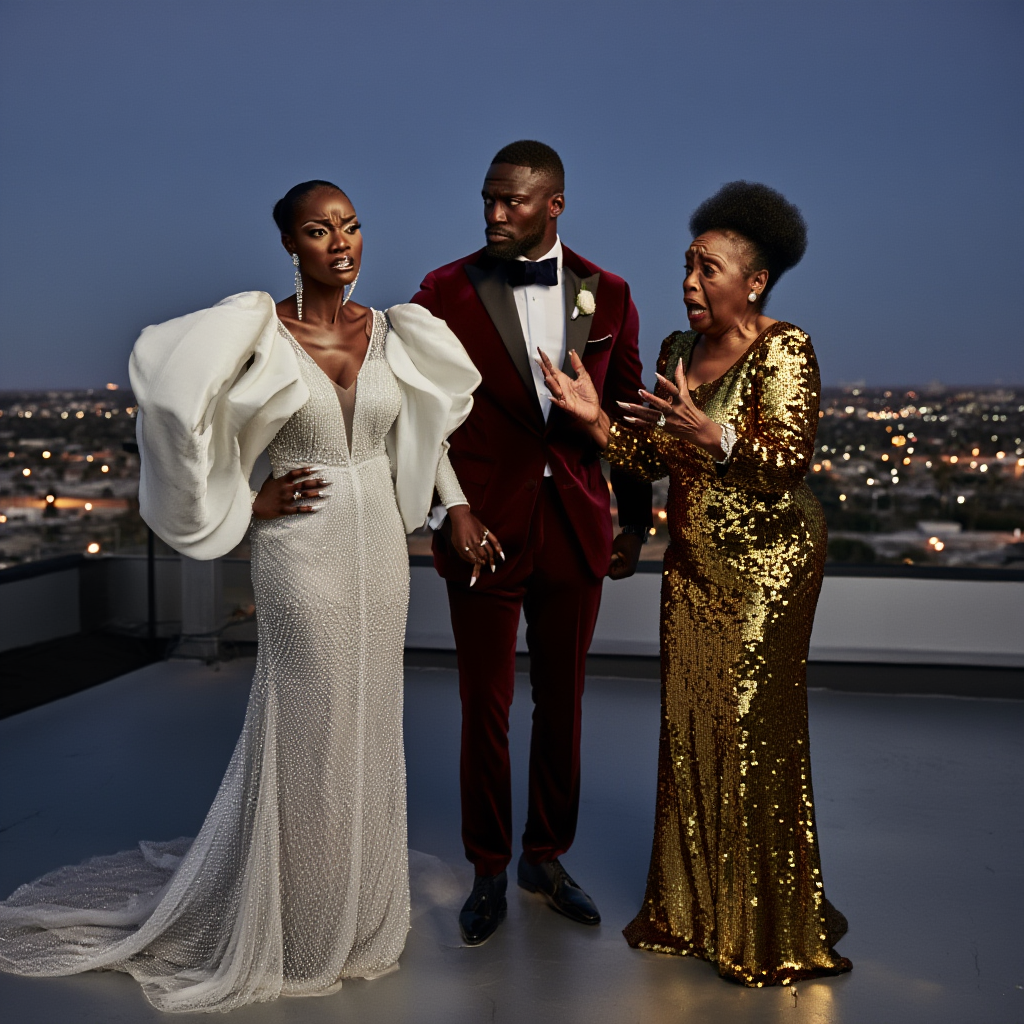
The Flowers That Stopped a Wedding
I was boiling water for pasta when the text arrived.
The pot hissed on the stove, steam curling up toward the same yellowed ceiling I’d stared at through years of sleepless nights: colic, fevers, college acceptance letters, the day he left for basic training. My phone buzzed once against the counter, polite and lethal.
Mom, the wedding is adults-only and very formal. Emily thinks you can be a bit… dramatic. It’s better if you don’t come. Enjoy your day.
No emojis. No exclamation points. Just the sterile precision of a message I suspected Emily had dictated while Michael stared at the floor.
I stood there holding the wooden spoon like it was a foreign object. The water reached a rolling boil and still I didn’t move. Twenty-six years of birthdays, scraped knees, parent-teacher nights, and emergency-room dashes, erased in one sentence.
I typed back before the hurt could finish forming words in my throat.
That’s okay. Enjoy today.
Four words. Four syllables. The most dignified lie I have ever told.
Then I turned the burner off, walked to the kitchen table, and sat down in the same chair where I once helped him sound out “cat” and “dog.” I closed my eyes and breathed until the scream inside me shrank into something cold and useful.
If my son wanted a wedding without his mother, he would have one. But he would not have a day without feeling her.
The morning of the wedding, I put on the navy dress I’d bought three months ago when I still believed I’d be sitting in the front pew. I curled my hair the way Michael always liked when he was little—“Mommy looks like a princess.” I even wore the pearl earrings he gave me for my fiftieth birthday, the ones he saved six months of army pay to buy.
Then I drove to Le Jardin Fleuriste, the kind of shop that smells like money and refrigerated roses. The arrangement in the window was obscene in its beauty: ivory roses the size of a child’s fist, white phalaenopsis orchids cascading like a waterfall, clouds of baby’s breath and silver-dollar eucalyptus. It cost more than my first car.
I handed over my credit card without blinking.
The girl at the counter passed me the little white card.
I wrote six words in my neatest handwriting.
Wishing you both joy. Always — Mom
No explanation. No guilt trip. Just love, plain and devastating.
“Delivery time?” I asked.
“Eleven-thirty sharp,” she said. “Right when the ceremony starts.”
Perfect.
I went home, took the navy dress off, and put on yoga pants and the old Dartmouth hoodie Michael left behind in high school. I made tea. I waited.
At 11:27 my phone began its frantic dance across the coffee table.
Michael Michael Michael Michael Michael
I let it ring until voicemail gave up. Then I answered on the eighth attempt.
His voice was shredded. “Mom… where are you? Why would you—why did you do that?”
I sipped my tea. “Do what, sweetheart? I sent flowers. You said the venue was very formal. I assumed they’d appreciate something tasteful.”
In the background I heard chaos: a woman shrieking about timing, the planner hissing into a headset, organ music that had clearly stopped and started three times.
“Mom, the card—the officiant read the card out loud. To everyone. People keep asking why you’re not here. Emily’s crying. Her mother is threatening to call security on a florist. Please—can you just—can you come? Now?”
I watched a cardinal land on the feeder outside my window. Bright red. Unbothered.
“Michael,” I said gently, “you asked me not to come. I’m respecting your wishes.”
Silence. Then a sound I never thought I’d hear from my grown son: a broken sob.
“I didn’t mean it,” he whispered. “She said it would be easier if you weren’t… if you didn’t make a scene. I thought—I thought if I just—”
“If you just what?” My voice stayed soft, but something steel slid beneath it. “If you humiliated me privately, I’d disappear quietly? I’m your mother, Michael. Not a guest who can be uninvited because I might cry during the vows.”
“I’m sorry,” he choked. “Mom, I’m so sorry.”
I let him cry. Mothers know the sound of their child’s tears even when they’re twenty-six and wearing a tuxedo that costs more than my monthly mortgage.
“Listen to me,” I said at last. “You are about to stand up in front of God and everyone and promise to love someone for the rest of your life. Start as you mean to go on. With honesty. With courage. With respect for the people who loved you before you ever met her.”
I heard Emily in the background, voice shrill: “Is that her? Give me the phone—”
Michael’s voice cracked like he was fifteen again. “Mom, I love you.”
“I know you do, baby.” I smiled even though it hurt. “And I love you enough to let you fix this yourself. Go marry your girl. Mean every word. And when you walk back down that aisle, look at the flowers I sent and remember who taught you what love actually looks like when it’s brave.”
I hung up.
Ten minutes later a video appeared in the family group chat—someone’s aunt, apparently live-streaming “for Grandma in Florida.” The camera wobbled, then focused on the altar. There were the flowers, impossible to miss, towering behind the officiant like a silent witness. Michael stood at the head of the aisle, eyes red, clutching Emily’s hands like a drowning man. When the officiant asked if anyone objected, Michael himself looked straight into the arrangement and mouthed two words I could read perfectly from forty miles away.
Thank you.
They finished the ceremony. The kiss was rushed. The recessional music played too fast. But they were married.
That night, at 11:03 p.m., my doorbell rang.
Michael stood on the porch in his tuxedo jacket and undone bow tie, hair falling into his eyes the way it did when he was eight. Emily waited in the car, headlights cutting across the wet driveway.
He didn’t speak. Just walked straight into my arms like he was coming home from war.
I held him the way I did the day he was born—tight, fierce, absolute.
Behind him, Emily got out of the car. She was crying too, mascara streaked, looking very young and very small without her planner and her guest-list rules.
“I’m sorry, Mrs. Callahan,” she said, voice trembling. “I was—I was scared you’d embarrass me. I didn’t know how to handle loving someone who already had so much love in his life. I thought if I could just… control it—”
I looked at her over my son’s shoulder.
“Love isn’t a threat, Emily,” I said. “It’s a foundation. You’ll need it one day when the babies don’t sleep and the money runs out and life gets ugly. You’ll need every bit of it.”
She nodded, tears dripping off her chin.
Michael pulled back just far enough to look at me. “I told everyone at the reception,” he said hoarsely. “I got up and told them the flowers were from my mother. That she’s the strongest person I know. That I was an idiot.”
I smoothed his hair the way I hadn’t since he was small.
“You were a scared little boy trying to please someone,” I said. “Now be a man and never do it again.”
He laughed once, wet and ragged, then rested his forehead against mine.
Emily stepped closer. Hesitated. Then, to my eternal surprise, she hugged me too—awkward, bridal-gown rustling, perfume overwhelming.
“I’d like to start over,” she whispered against my shoulder. “If you’ll let me.”
I looked at the two of them—my son and the girl who would now carry my grandchildren—and felt the last shard of hurt slide out of my chest and shatter on the porch.
“Of course,” I said. “Families are messy that way. We let people back in. It’s what we do.”
Later, after they’d gone and the house was quiet again, I opened the front door one more time. The night smelled like rain and cut grass.
Somewhere across town, in a country-club ballroom, my flowers were probably wilting under too-bright lights. But they had done their work.
A mother’s love, it turns out, doesn’t need a seat at the table to be felt.
Sometimes it just needs six words and a willingness to let the truth bloom in public.
I closed the door, turned off the porch light, and went to bed.
Tomorrow I would make lasagna. They were coming for Sunday dinner—both of them.
And this time, I would be dramatic about it.
I earned that right a long time ago.