
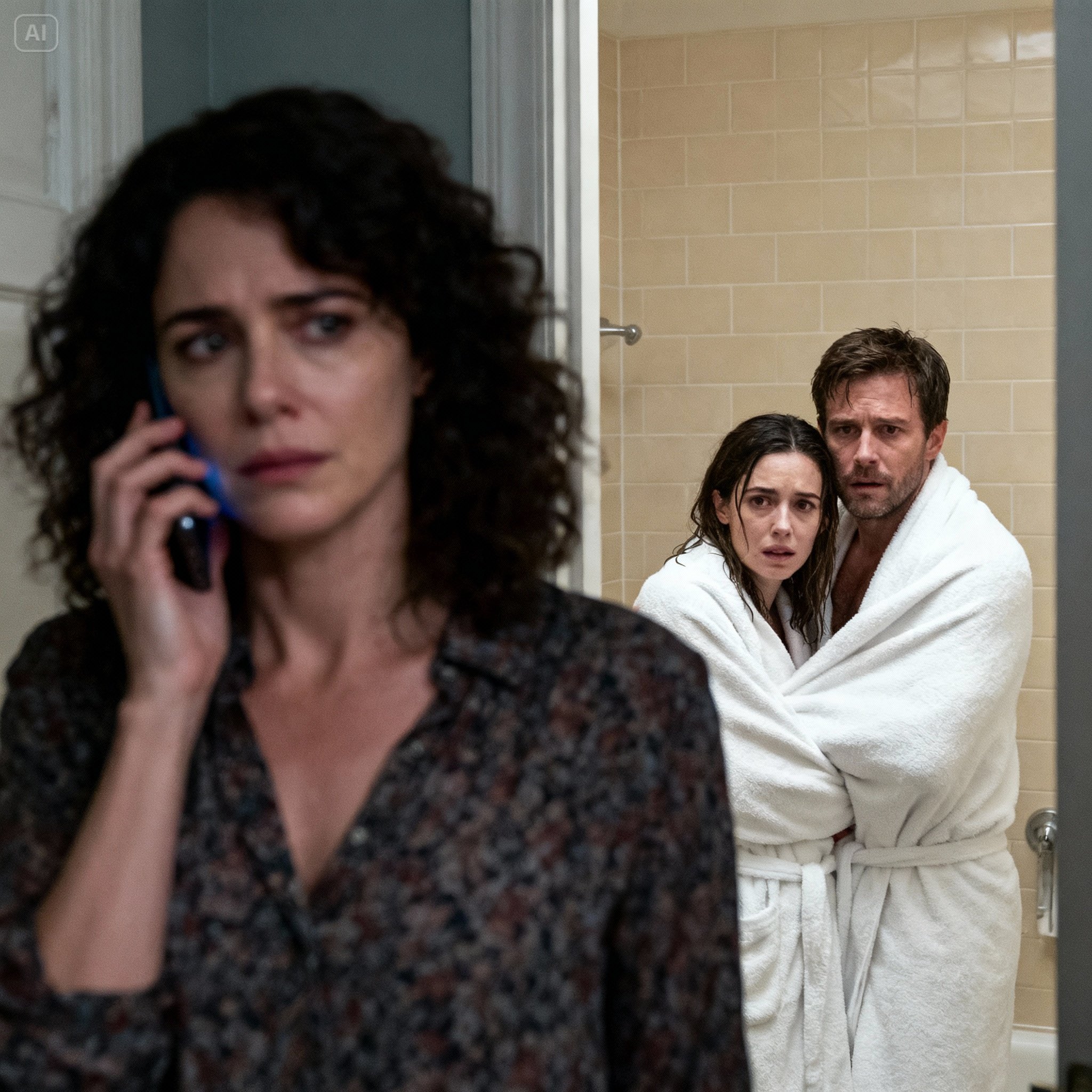
I didn’t expect betrayal to sound like dripping water and muffled laughter.
It was a quiet Saturday afternoon in our suburban Ohio neighborhood—the kind where lawnmowers hummed lazily and children rode bikes in slow circles. I had just come back from the grocery store, arms full of bags, already planning dinner in my head.
That’s when I heard the shower running in the downstairs bathroom.
At first, nothing felt wrong. Mark—my husband of twelve years—sometimes showered in the middle of the day after yard work. But then I heard his voice.
Low. Playful. Intimate.
And then a woman laughed.
Not my laugh.
I froze in the hallway, grocery bags slipping from my fingers. My heart pounded, but something else happened too—my mind went frighteningly calm. I recognized the laugh instantly.
Lisa Bennett.
Our neighbor.
The woman who borrowed sugar from me. The woman whose kids played with mine. The woman whose husband waved at us every morning before leaving for work.
I walked toward the bathroom quietly. Through the thin wooden door, I heard whispers and the sound of water meant to hide what they were doing.
I didn’t scream.
I didn’t burst in.
I didn’t cry.
Instead, I gently pulled the door closed and slid the old brass bolt into place.
Click.
Inside, the water shut off abruptly.
“Emily?” Mark called out, confusion instantly replacing pleasure.
Lisa’s voice went sharp with panic. “What’s happening?”
I didn’t answer.
I walked down to the basement, turned the main water valve clockwise, and shut it off completely. The house fell silent except for frantic knocking and raised voices behind the bathroom door.
“Open the door!” Mark shouted. “This isn’t funny!”
I sat at the kitchen table and placed my phone down carefully, like I was setting up a chess piece. My hands weren’t shaking. That surprised me most.
I scrolled through my contacts until I found Daniel Bennett.
Lisa’s husband.
We had exchanged numbers years ago “just in case.” This felt like exactly that kind of emergency.
He answered on the second ring.
“Hey Emily,” he said casually. “Everything okay?”
I kept my voice calm. Almost polite.
“Hi Daniel. I’m sorry to bother you, but we’re having a plumbing issue. The downstairs bathroom seems… stuck. You’re always so good at fixing things. Any chance you could come take a look?”
There was a pause. Then a small laugh.
“Sure. I’m only a few blocks away. I’ll be there in ten minutes.”
“Thank you,” I said. “I really appreciate it.”
I hung up.
Behind the locked door, panic escalated.
“Emily, please!” Mark yelled. “Open the door—we can explain!”
Lisa began crying.
I didn’t respond.
Ten minutes later, the doorbell rang.
I opened it to find Daniel standing there with a tool bag slung over his shoulder, still wearing his work jacket.
“Where’s the problem?” he asked.
I met his eyes.
“Downstairs bathroom,” I said quietly. “The door’s locked.”
He frowned. “Why’s it locked?”
“I thought it’d be easier if you saw it yourself.”
We walked together down the hallway. The pounding behind the door had stopped. Silence hung heavy.
Daniel knocked once. “Lisa?”
No answer.
I stepped back and nodded toward the door.
“Go ahead,” I said. “You should open it.”
When he unlocked the door and pushed it open, the world seemed to tilt.
There stood Mark—shirtless, pale, trapped.
And Lisa—wrapped in a towel that wasn’t hers, mascara streaked, eyes wide with terror.
Daniel didn’t yell.
He didn’t hit anyone.
He simply stared.
Then he turned to me slowly.
“I understand,” he said.
That night, two marriages ended.
But something else began.
I didn’t lose my dignity. I didn’t beg. I didn’t scream to be heard.
I chose clarity over chaos.
Silence over hysteria.
Strength over humiliation.
And when people later asked how I stayed so calm, I told them the truth:
Sometimes the most powerful response to betrayal isn’t rage.
It’s control.
Because when you stop reacting—and start deciding—everything changes.