
THEY WERE NEVER SUPPOSED TO MEET — Police Identify the Last Person Outside the Family to See Little Gus Lamont
In a chilling breakthrough that has stunned investigators and the public alike, South Australian Police have made significant progress in the disappearance of four-year-old August “Gus” Lamont. What began as a baffling missing child case in the remote outback has now been elevated to a major crime investigation, with authorities identifying a suspect who resided at the family’s homestead but is not one of Gus’s parents. This development has shattered initial assumptions about the boy’s fate, raising profound questions about what truly happened on that fateful evening in September 2025. While early reports and social media speculation have sometimes veered into sensational territory— including unverified claims of sightings hundreds of kilometers away—the facts paint a picture of a tragedy unfolding within the isolated confines of Oak Park Station. As detectives retrace every step, the community holds its breath, fearing the worst while hoping for closure in one of Australia’s most heart-wrenching unsolved cases.

The Boy at the Center of the Mystery: Who Was Gus Lamont?
August “Gus” Lamont was born around 2021, a curly-haired, bright-eyed toddler whose infectious smile captured the hearts of those who knew him. Described by family and authorities as a typical four-year-old full of energy and curiosity, Gus lived with his parents and extended family on Oak Park Station, a sprawling sheep station located approximately 40 kilometers south of Yunta in South Australia’s arid Mid North region. This remote homestead, about 300 kilometers northeast of Adelaide, is characterized by vast, unforgiving landscapes—scrubland dotted with saltbush, rocky outcrops, and occasional dams, where temperatures can soar and isolation is a way of life.
The property, covering thousands of hectares, is home to sheep farming operations and is far removed from urban conveniences. Gus’s family included his parents, who were not present at the time of his disappearance, and his grandparents, Josie and Shannon Murray, who were caring for him that weekend. According to police releases, Gus was last seen wearing a blue Minions t-shirt, gray shorts, and no shoes—a detail that underscored the casual, everyday nature of his playtime turning into a nightmare. His disappearance has not only devastated his immediate circle but has also sparked national and international attention, drawing comparisons to other high-profile missing children cases like that of William Tyrrell in New South Wales.
Gus’s life on the station was simple yet adventurous. Photos released by police show him playing with toys, his blonde curls framing a face full of innocence. One image depicts him in a “My Mummy” shirt, smiling at the camera while engaging in playdough activities—a stark contrast to the desolate search scenes that would follow.
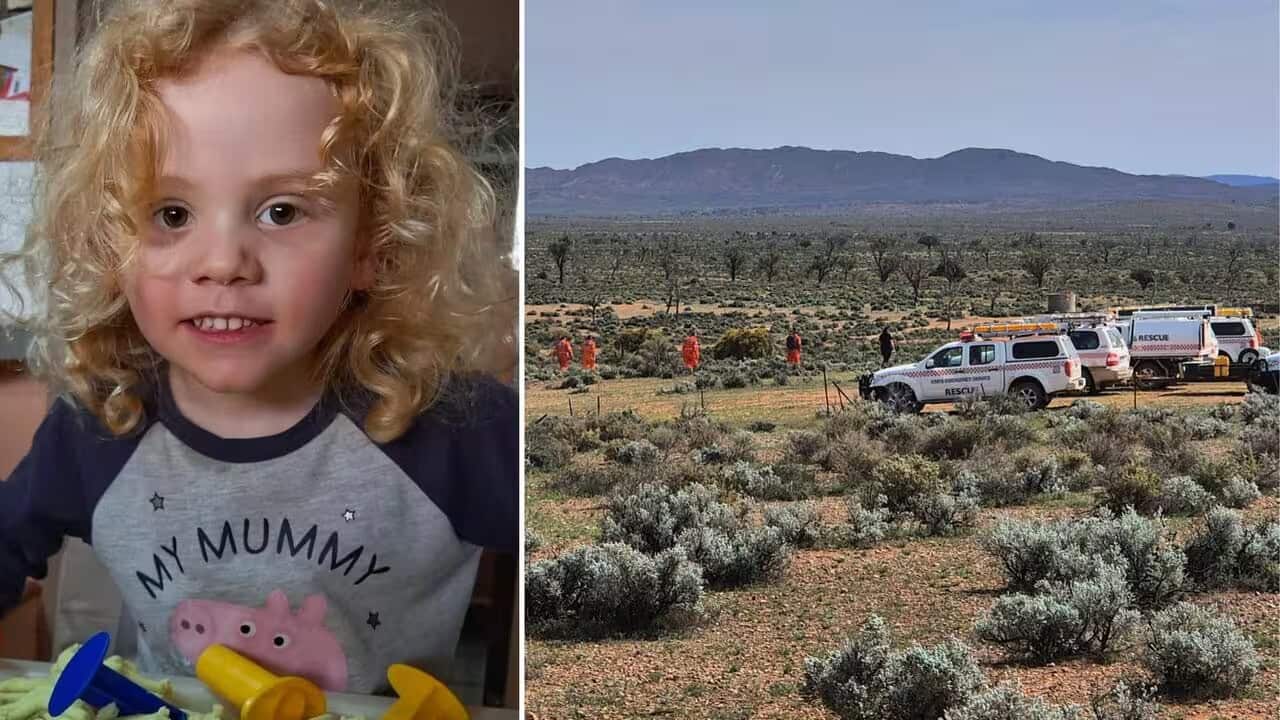
Family statements paint him as a happy child who loved the outdoors, often playing near dirt mounds or exploring the property under supervision. But on September 27, 2025, that supervision allegedly lapsed, leading to one of the largest search operations in South Australian history.
The Fateful Day: Timeline of the Disappearance
To understand the gravity of the recent breakthrough, it’s essential to revisit the timeline of events surrounding Gus’s vanishing. On Saturday, September 27, 2025, Gus was under the care of his grandparents at Oak Park Station while his parents were away. According to accounts provided to police, his grandmother, Josie Murray, last saw him around 5:00 PM playing on a mound of dirt near the homestead. The property’s isolation meant no immediate neighbors or passersby; the nearest town, Yunta, is a small community with limited resources.
At approximately 5:30 PM, Josie reportedly went outside to call Gus in for the evening but found no trace of him. The family—consisting of the grandparents and possibly other residents—searched the immediate area for about three hours before contacting authorities around 8:30 PM. Sunset had occurred around 6:15 PM, meaning much of this initial search happened in darkness, with Gus not responding to calls of his name. Police were notified, and the response was swift, but the delay raised early questions about the family’s actions.
Here’s a detailed timeline of key events:
| Date | Event |
|---|---|
| September 27, 2025 (5:00 PM) | Gus last seen playing outside by grandmother. |
| September 27, 2025 (5:30 PM) | Family notices Gus missing; begins private search. |
| September 27, 2025 (8:30 PM) | Police notified; initial response begins. |
| September 28–October 7, 2025 | Large-scale search operation involving SES, ADF, drones, and trackers. |
| October 14–October 2025 | Second targeted search of 5–6 km radius around homestead. |
| October 30–31, 2025 | Third search: Dam drained and inspected. |
| November 24–26, 2025 | Fourth search: Mine shafts investigated. |
| January 2026 | Property searched; items seized including vehicle and electronics. |
| February 5, 2026 | Case declared major crime; suspect identified. |
| February 6, 2026 | Grandparents issue statement via lawyers. |
This chronology highlights the exhaustive efforts to find Gus, but also the shifting focus from rescue to recovery.
The Searches: From Hope to Heartbreak
The initial search for Gus was described by South Australia Police (SAPOL) as one of the most intensive in the state’s history. Commencing immediately after the report, it involved over 100 personnel, including the State Emergency Service (SES), Australian Defence Force (ADF) members, Aboriginal trackers, helicopters with infrared cameras, drones, trail bikes, and all-terrain vehicles. Community volunteers and family members joined in, combing the rugged terrain for any sign of the boy—footprints, clothing, or cries for help.
Despite finding multiple footprints during the 10-day operation, none were conclusively linked to Gus. The search was scaled back on October 7, 2025, with no tangible evidence recovered. Authorities transferred the case to the Missing Persons Investigation Section, but hope lingered that Gus might have wandered off and survived in the bush.
A second search on October 14 targeted a 5–6 kilometer radius around the homestead, deploying over 80 personnel, 33 vehicles, drones, and utility terrain vehicles. Again, nothing was found. The third effort, on October 30–31, focused on a dam 600 meters from the last sighting. Police drained 3.2 million liters of water, used divers, and conducted aerial scans—no trace.
The fourth search in late November examined six unfenced mine shafts 5.5–12 kilometers away, using thermal imaging drones and specialized teams. It concluded without evidence on November 26.
These operations, while thorough, underscored the challenges of the outback: vast distances, harsh weather, and potential for evidence degradation.
Shifting Gears: From Missing Person to Major Crime
By late October 2025, a 12-member taskforce, Task Force Horizon, was formed to delve deeper. In January 2026, police searched the property again, seizing a vehicle, motorcycle, and electronic devices—items that could hold digital clues or forensic evidence.
The pivotal moment came on February 5, 2026, when SAPOL declared the case a major crime. Detective Superintendent Darren Fielke announced that inconsistencies in statements from a resident at Oak Park Station had led to their identification as a suspect. Crucially, he stressed that Gus’s parents were not suspects, but the individual—known to Gus and living on the property—had withdrawn cooperation after discrepancies emerged. This resident’s timeline conflicted with others, prompting the shift in investigation.
Fielke noted three initial scenarios: Gus wandering off, abduction by a stranger, or involvement by someone known to him. Abduction was ruled out due to the location’s remoteness, and no evidence supported wandering. The focus now is on foul play, with police believing Gus is no longer alive.
The Suspect: A Resident Known to Gus
The identification of the suspect marks a turning point. While police have not named the individual, sources indicate they resided at the homestead and were part of the household dynamic. This person is not a parent but someone “close” in proximity, raising questions about internal conflicts or oversights. The prompt’s notion of a “last person outside the family” aligns loosely here, as the suspect may not be blood-related but was integrated into daily life.
Speculation has swirled, particularly on social media. X posts suggest tensions within the family, with one user noting the grandparents’ hiring of separate lawyers as indicative of involvement. Another highlighted potential gender identity issues, claiming one grandparent is transgender, adding layers of controversy. However, police have emphasized that the parents are cleared, focusing on this resident’s inconsistencies.
Family Response: Devastation and Defiance
On February 6, 2026, Gus’s grandparents, Josie and Shannon Murray, issued a statement through their lawyers, expressing they were “absolutely devastated” by the major crime declaration. They affirmed full cooperation with the investigation and a desire to reunite Gus with his parents. The hiring of high-profile legal counsel—separate for each—has fueled public scrutiny, with some interpreting it as preparatory for charges.
Gus’s parents have remained largely private, but earlier appeals pleaded for information. The family’s remote lifestyle has been scrutinized, with questions about why Gus was left unsupervised, even briefly.
Public Reaction and Media Scrutiny
The case has gripped Australia, with X buzzing about developments. Posts range from sympathetic calls for justice to speculative theories, including unverified sightings far from the station—claims debunked by official sources. One viral post lamented the “pathetic system of law,” while others shared news clips.
Media coverage has been intense, from ABC’s in-depth analyses to international outlets like BBC. Bias assumptions aside, stakeholders—police, family, community—represent varied viewpoints: authorities stress evidence, family pleads innocence, public demands answers.
Controversies and Broader Implications
Controversies include the transgender allegation, which, if true, highlights media sensitivity in reporting. Broader issues: child safety in remote areas, search resource allocation, and justice delays. Under SA law, murder of a child carries life with a 20-year non-parole minimum— a point debated online.
Conclusion: The Search for Truth Continues
As investigators zero in, the key to Gus’s fate may lie in the seized items or further statements. This “chilling breakthrough” has blown apart early theories, but without a body or confession, questions linger. Locals whisper of tragedy, detectives retrace steps, and a nation waits. Gus’s story reminds us of vulnerability in isolation—may truth prevail, bringing peace to those who fear the worst.
Để lại một bình luận