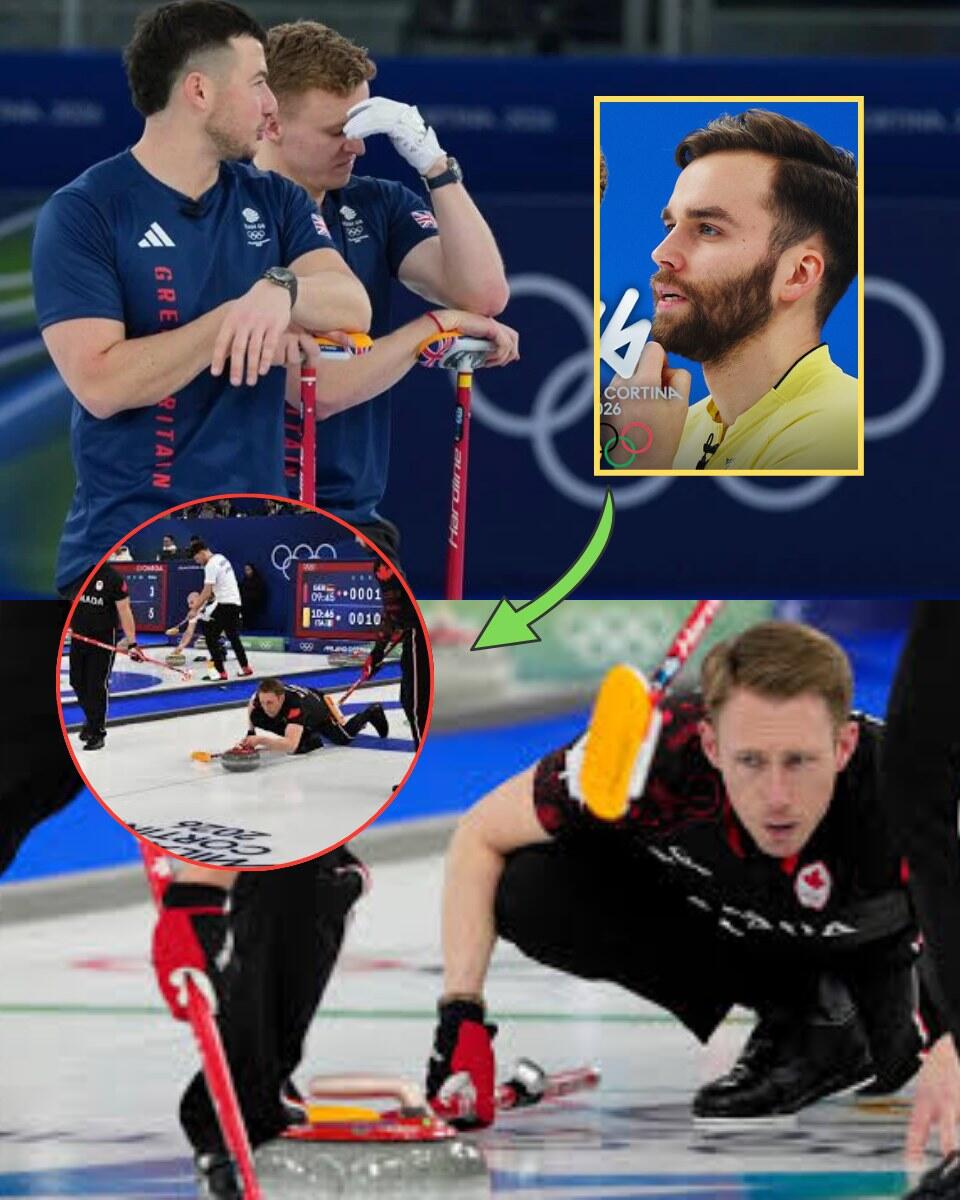
The curling controversy from the 2026 Winter Olympics in Milan-Cortina refuses to fade, fueled by fresh sensational claims circulating online. A viral headline blares: “He couldn’t even look me in the eye!” Oskar Eriksson exposes the DARK truth after the ‘double-touch’ scandal. The 25-year legacy of a champion SHATTERED in minutes… It promises explosive details in the “first comment,” a classic tactic for engagement on social media and clickbait sites.
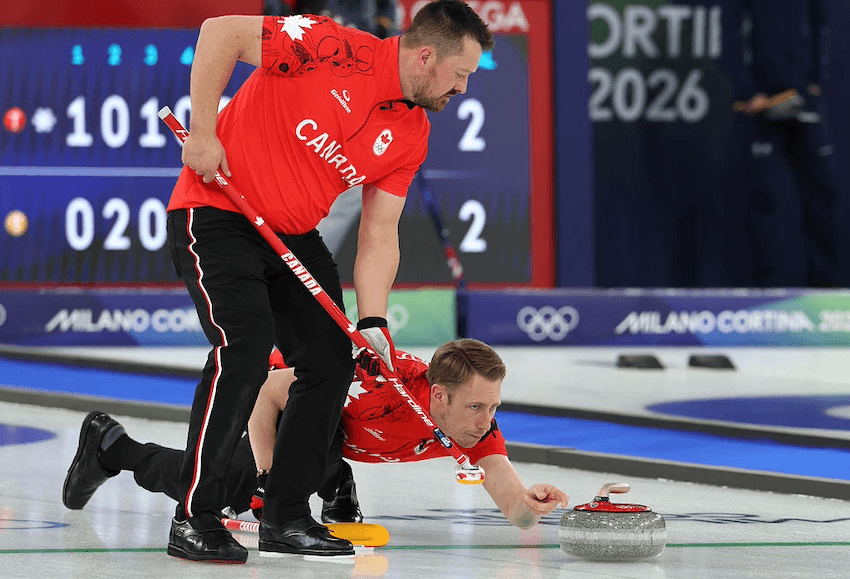
This latest wave appears to build on the February 13, 2026, incident during Canada’s round-robin match against Sweden. Swedish curler Oskar Eriksson accused Canada’s vice-skip Marc Kennedy of “double-touching” the stone—releasing the handle (with its electronic hog-line sensor) but then touching the granite body with a finger to subtly adjust its path past the hog line. Video footage from Swedish broadcaster SVT and other angles circulated widely, seemingly showing Kennedy’s finger making contact.
Kennedy denied any intentional violation, erupting in a rare on-ice outburst: telling Eriksson to “f— off” repeatedly amid heated back-and-forth. World Curling reviewed the play but issued no stone-removal penalty, as on-ice decisions are final without video replay reviews. Instead, Kennedy received a verbal warning for his language, with officials noting further misconduct could escalate sanctions. Temporary extra observers monitored deliveries briefly, but the measure was quickly dropped.
Post-incident, Eriksson stood firm. In interviews, he reiterated belief in what he saw, suggesting Kennedy’s defensive reaction spoke volumes. One report quoted Eriksson implying shame or avoidance in Kennedy’s demeanor, aligning loosely with phrases like “couldn’t even look me in the eye.” Swedish teammates, including Niklas Edin, claimed Canada (and Kennedy specifically) had long been suspected of similar minor infractions, with alerts raised for years. Eriksson referenced prior video evidence Kennedy allegedly knew about, framing the Olympic scrutiny as overdue exposure rather than a setup.
Kennedy countered by calling the attention a “premeditated plan” to target Canada, accusing rivals of undermining the sport’s honor system. He regretted his profanity but refused to apologize for defending his integrity after 25 years in the game, insisting double-touching offered no real advantage and was common (if technical) among elite players.
Canada powered through the noise. They defeated Great Britain in the February 21 gold-medal final, with skip Brad Jacobs delivering a fiery podium message: hoping images of their celebration would be “burned into your brain forever” for critics who attacked Kennedy, the team, and families online. Kennedy celebrated emotionally, fist-pumping and highlighting team resilience. Canadian Olympic officials likened the infraction to minor faults in other sports—technical but rarely game-changing.
No credible evidence supports dramatic escalations like a “shattered legacy,” forced retirement, or “dark truth” confession. Searches of major outlets (NPR, BBC, ESPN, Guardian, AP, CBC) show no post-Games ban, March 2026 “judgment,” reputation “total destruction,” or Kennedy confiding despair like “I have nothing left” to teammates. Such quotes and scenarios trace to unverified Facebook posts, viral pages, and engagement-bait content—often recycling old footage or fabricating drama for clicks.
/origin-imgresizer.tntsports.io/2026/02/15/image-4000a5e8-ae39-4251-aa37-00dcd311aaad-85-2560-1440.jpeg)
Social media amplified the feud: X posts debated ethics, shared clips, and showed fan divisions. Some defended curling’s self-policing “spirit,” while others called for tech like replays. Eriksson’s comments kept the story alive pre-final, but coverage shifted to Canada’s redemption arc after gold.
The episode highlights curling’s tension: a sport built on trust and etiquette now faces professionalism, media scrutiny, and social amplification. Minor touches may occur unintentionally in high-pressure deliveries, but accusations erode goodwill. World Curling has discussed rule tweaks, but no sweeping changes followed.
Kennedy’s legacy endures: multiple Olympic medals, world titles, and a key role in Canada’s dominance. The “25-year legacy shattered” narrative is hype, not fact. Canada won on ice despite the storm, turning controversy into triumph. As Eriksson and others reflect, the real debate is preserving curling’s unique culture amid evolving competition.
Để lại một bình luận