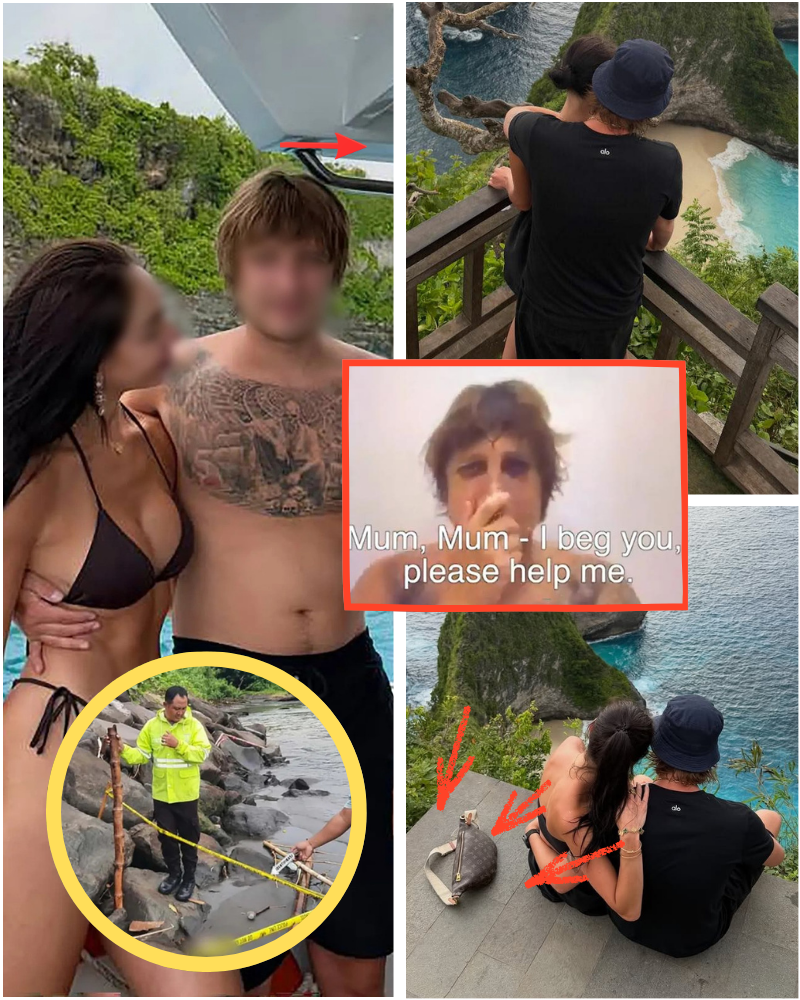
The kidnapping and murder of Ukrainian tourist Igor Komarov in Bali, Indonesia, is becoming one of the most shocking criminal cases in international public opinion in 2026. New investigation results released by Bali police have revealed many noteworthy details, including a particularly controversial element: the victim’s location may have been revealed through social media posts by his girlfriend. This is not a random detail, but according to many investigators, it may have been a crucial link that helped the criminal group identify their target and execute the kidnapping plan.
The story begins in mid-February 2026 when 28-year-old Igor Komarov arrived in Bali for a vacation with his girlfriend, a social media influencer. In the early days of their trip, the couple frequently posted travel photos on Instagram, including specific locations in Jimbaran – a famous coastal area of Bali. These seemingly harmless Valentine’s Day romantic photos later became the focus of a suspicious investigation. Many international media outlets suggested that the public posts inadvertently revealed Komarov’s location to those tracking him. ([News.com.au][1])
According to the official Bali police report, the abduction occurred on February 15th while Komarov was traveling by motorcycle in the Jimbaran area. Witnesses said a group of people in multiple vehicles intercepted his motorcycle in an operation described as “military-like.” The suspects quickly subdued the victim and forced him into an SUV before leaving the scene. The entire incident unfolded in just a few minutes, leaving witnesses no time to react. ([vnexpress.net][2])
Based on camera footage and witness statements, investigators concluded that this was a meticulously planned abduction involving multiple individuals and vehicles. This suggests the criminal group had been tracking their target beforehand, knowing Komarov’s travel schedule. Therefore, the hypothesis that his location information was leaked via social media quickly became a key line of investigation.
Just days after the kidnapping, a shocking video circulated online. In the video, Igor Komarov appeared with a bruised face and a body showing signs of torture. He read a plea for help, urging his family to pay a ransom of $10 million. In the video, the victim stated that he had suffered broken ribs and legs, and begged his mother to return the money the kidnappers claimed his family had stolen from an international criminal organization. ([The Sun][3])
This blackmail video quickly made the incident a hot topic in international media. Many theories began to emerge regarding Komarov’s identity. Some sources suggest he is the son of a businessman or an influential figure in the Ukrainian criminal underworld. However, Indonesian police say they are cautiously verifying this information and have not yet reached an official conclusion regarding the connection between the victim and criminal organizations. ([Znews.vn][4])
Meanwhile, the search for the victim continues urgently. Investigators are tracing leads using GPS data, traffic cameras, and the suspect’s car rental transactions. A crucial clue emerged when police discovered blood traces at a villa in the Tabanan area, believed to be where the kidnappers held the victim. Subsequent forensic analysis confirmed that the blood sample matched Igor Komarov’s DNA. ([Українські Національні Новини (УНН)][5])

The tragedy reached its peak in late February when residents in the Ketewel coastal area discovered several body parts washed ashore at the mouth of the Wos River. Samples were collected and sent to a forensic laboratory for analysis. After days of testing, Bali police confirmed that the DNA of the body parts matched the DNA of the victim’s mother with 99.99% accuracy. This meant that Igor Komarov had died after being kidnapped. ([ANTARA News][6])
The news of the dismembered body shocked public opinion, not only in Indonesia but also in many other countries. Many people are questioning the brutality of the case and the reasons behind the kidnappers’ extreme actions. According to security experts, in the world of transnational crime, such incidents are commonplace.
Kidnappings for revenge or ransom often involve high levels of violence aimed at psychologically impacting the victim’s family.
During the investigation, police identified at least seven suspects directly involved in the case. One was apprehended while attempting to leave Indonesia using a fake passport, while the others are believed to have fled Bali via international air travel. Interpol subsequently issued a red notice to coordinate the global pursuit of the suspects. ([The Sun][7])
While the international manhunt was underway, another detail sparked much debate: the unwitting role of social media in the case. According to investigators, photos and videos posted by Komarov’s girlfriend may have provided information about the victim’s location and travel times. Seemingly harmless data such as place names, surrounding scenery, or the time of posting could have helped stalkers pinpoint the target’s exact whereabouts. ([News.com.au][1])

In the digital age, sharing personal lives on social media has become commonplace. However, the case of Igor Komarov shows the dangerous downside of publicly disclosing personal information. Many cybersecurity experts believe that criminal gangs are increasingly exploiting social media data to track targets, especially wealthy individuals or those connected to large financial networks.
The case also raises serious questions about security for international tourists at popular tourist destinations. Bali has long been considered one of Asia’s tourist paradises, attracting millions of visitors each year. However, the emergence of cases involving transnational crime shows that even the most peaceful locations can become intersections of global criminal networks.
Currently, the investigation is still ongoing and expanding with the participation of many international agencies. Indonesian authorities say they are coordinating with several European countries to track down the suspects who have left Bali. At the same time, the victim’s electronic, financial, and communication data is being analyzed to determine the exact motive for the crime.
The tragedy of Igor Komarov is therefore more than just a simple criminal case. It reflects the complex connections between transnational crime, digital technology, and the habit of sharing personal information in the age of social media. And in the whole story, a seemingly small detail – a photo posted online – may have become the link that started a chain of tragic events.
Để lại một bình luận