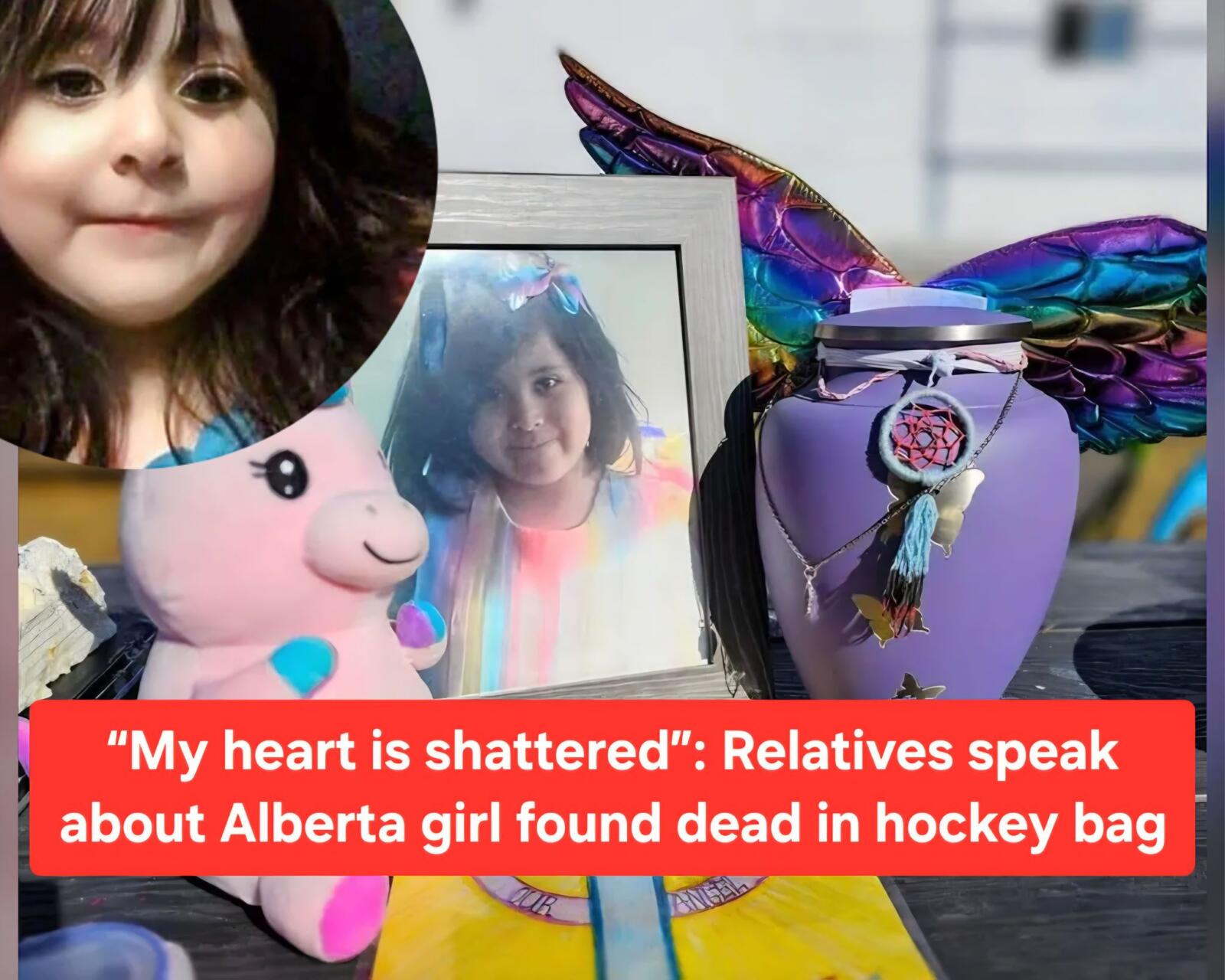
A heavy atmosphere hung over the courtroom in Edmonton, Alberta, Canada, as the family of eight-year-old Nina Napope Dumais stood before the court to deliver their statements about the impact of the crime that claimed her life. Words broken by tears, prolonged silences in the courtroom, and the pained gazes of her loved ones transformed the sentencing hearing into one of the most emotionally charged moments of the case that has shocked Canada in recent times.
The case began to cause a stir in 2023 when Nina’s body was discovered in a hockey bag in the back of a truck in the Samson Cree Nation Indigenous community. This horrific discovery quickly shocked the community, not only because of the gruesome circumstances of her discovery, but also because details of Nina’s life before her death gradually came to light during the investigation.
According to court records, Nina was living under the care of Ashley Rattlesnake, who later pleaded guilty to manslaughter in connection with the girl’s death. However, information revealed during the trial showed a far more complex and heartbreaking story behind Nina’s death than initially understood.
When prosecutors presented evidence, the court heard that Nina had suffered prolonged abuse and neglect while under Rattlesnake’s care. Medical reports and autopsy results showed various injuries, including multiple broken bones. Notably, some of the fractures had begun to heal, suggesting that these injuries were not one-off but had existed previously.
The autopsy also indicated that Nina had sepsis – an extremely dangerous medical condition – stemming from an infected tooth that went untreated. According to medical experts, if timely medical care had been provided, this condition could have been detected and treated. However, in Nina’s case, the lack of care allowed the infection to become severe and spread throughout her body.
Furthermore, the forensic report determined that Nina suffered a severe head injury, believed to be the direct cause of her death. Prosecutors emphasized in court that no emergency calls were made to emergency services after the injury occurred. This became one of the details that sparked public outrage in the case.
In the courtroom, the statements of Nina’s family highlighted the human aspect behind the dry legal documents and medical terminology. Nina’s father stood before the court, his voice trembling as he tried to describe his daughter. He said that Nina was a child “full of life,” and to help those present understand what his daughter was like, he used a simple but touching image.
“When you step outside and feel the warmth of the sun on your skin, that’s Nina,” he said in court. That comparison silenced many in the courtroom. For the father, Nina was not just an eight-year-old child, but the light of the family – a presence that brought joy and hope.
Nina’s grandmother also spoke in court, sharing her deep grief at the loss of her first granddaughter. She recounted that Nina loved to sing and dance, and often made the whole family laugh with her innocence. In her statement, she said her heart had been “broken” since the day she received the news of her granddaughter’s death.
These accounts not only described a lost child, but also helped the court and the public better understand the life Nina should have had – a normal, joyful, and protected childhood. Instead, what was presented in the case file revealed a completely different reality.
During the investigation, police and prosecutors had to reconstruct the final months of Nina’s life. Evidence showed she lived in deprived conditions and received inadequate care. This raised serious questions about the child protection system and how authorities can detect similar cases early on.
The case quickly attracted media attention across Canada, not only because of the seriousness of the allegations but also because of the controversy surrounding the prosecution. Previously, the case had sparked controversy after the head of Edmonton’s police force publicly expressed concern about the possibility of a plea deal leading to a lighter sentence.

The police chief even called this possibility a “gross error of justice” if it occurred. This statement attracted significant public and media attention, as it is rare for a high-ranking law enforcement official to publicly express such strong opinions on a case in progress.
Subsequently, the prosecution confirmed that no plea deal had been reached.
No formal charges had been finalized at the time those comments were made. However, the debate reflected the level of public concern and outrage over the case.
Currently, in the sentencing phase, prosecutors are seeking a nine-year prison sentence for Ashley Rattlesnake. They argue that this sentence reflects the severity of the crime and the suffering Nina endured before her death.
Meanwhile, the defense team argues that a seven-year sentence is more appropriate given the circumstances of the case. They present several mitigating factors, including the defendant’s guilty plea and avoiding a lengthy trial for the victim’s family.
The difference between these two proposals raises a major question for the court: which sentence will accurately reflect the nature of the crime while also fulfilling the demands for justice for the victim’s family and the community.
For many following the case, the issue wasn’t just the prison sentence. Nina’s case became symbolic of broader concerns about protecting vulnerable children, particularly in communities where social and economic hardships can leave children vulnerable and undetected.
While sentencing hearings continued, Nina’s family said they hoped her story would raise awareness of the dangers many children face. For them, speaking the truth in court wasn’t just about seeking justice for Nina, but also about ensuring her memory wouldn’t be forgotten.
In the Edmonton courtroom, the family’s tearful statements reminded everyone that behind every case file are real people, real families, and lives forever changed. For Nina Napope Dumais’s family, the pain will never go away – but they hope that by telling her story, the world will better understand the terrible price of neglect and abuse against an innocent child.
Để lại một bình luận