A school violence incident in California, USA, in February 2026 quickly attracted international attention after investigators confirmed the victim, a 12-year-old student, had died after several days in a coma. The death of Khimberly Zavaleta Chuquipa not only shocked her family and community but also prompted authorities to launch a full-scale criminal investigation. Initially considered a school accident, the incident was later reclassified as a homicide after crucial forensic evidence emerged.
According to US media reports, the incident occurred on February 17, 2026, at Reseda Charter High School, located in the San Fernando Valley area of Los Angeles. At the time, the school hallway was crowded with students during a class change. Several witnesses reported that an argument broke out between a group of students, including Khimberly’s older sister. The verbal exchange quickly escalated into a physical altercation in the busy hallway.
According to some students present at the scene, Khimberly – then a sixth-grade student – stepped into the middle of the argument to protect her sister. Witnesses said she appeared to be trying to intervene and shield her sister as tensions escalated among the other students. However, in the ensuing chaos, a heavy glass bottle was reportedly thrown from the other group.
The bottle then struck Khimberly in the back of the head. According to witnesses, the impact caused her to lose her balance and fall to the hallway floor. Initially, many thought it was just a minor accident in a typical student fight. Teachers and school staff quickly intervened to disperse the crowd and take Khimberly to the school infirmary.
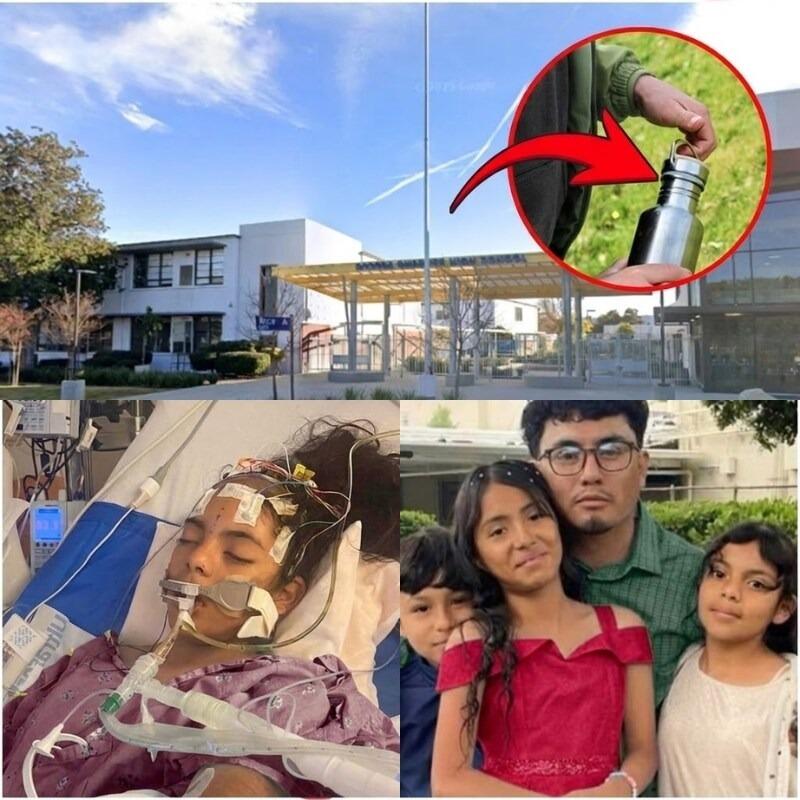 🚨 While protecting her older sister, a 12-year-old girl was hit in the head by a thrown bottle — tragedy struck a few days later.
In the initial hours following the incident, the signs of injury were not assessed as serious. Khimberly reportedly only complained of a headache and felt dizzy. However, according to her family, her condition began to deteriorate rapidly in the following hours and days. Severe headaches became more frequent, accompanied by symptoms such as nausea, dizziness, and disorientation.
The family then took Khimberly to the hospital for further examination. Doctors discovered signs of a more serious traumatic brain injury than initially suspected. According to US news sources, imaging tests showed signs of bleeding in the brain – a condition that can quickly become dangerous if not treated promptly.
Given her rapidly deteriorating condition, doctors decided to perform emergency brain surgery to relieve pressure in the skull. The surgery was performed in an attempt to save the girl’s life and prevent the brain damage from spreading. However, despite the medical team’s best efforts, Khimberly subsequently fell into a deep coma.
In the following days, her family and friends gathered to pray and hope for a miracle. Messages of support and sharing spread widely on social media, while the local community held numerous prayer services for Khimberly’s recovery.
However, on February 25, 2026, eight days after the incident, the family confirmed that Khimberly had passed away due to severe brain damage. Her death sent shockwaves through the student and parent community in the Los Angeles area.
Following Khimberly’s death, the initial police investigation was significantly expanded. The case was quickly referred to the Los Angeles Police Department’s specialized unit, the Los Angeles Police Department, with the involvement of the Serious Crimes Unit.
Notably, the case file was then transferred to the LAPD Robbery-Homicide Division, a unit that typically handles complex homicide cases. The involvement of such a high-level unit indicates the seriousness with which authorities assessed the incident.
Investigators began gathering statements from dozens of students and teachers present in the hallway at the time of the incident. School security camera footage was also reviewed to determine the exact sequence of events. Meanwhile, the most crucial piece of evidence – the bottle believed to have caused the injury – was sent to a forensic lab for analysis.
According to reports from the American media, forensic experts conducted fingerprint and DNA testing on the bottle’s surface. Notably, investigators discovered traces of “touch DNA,” that is, DNA left behind when a person directly touches an object.
This type of evidence, though very small, could help determine who held or threw the bottle before it struck Khimberly’s head. Experts say that modern DNA analysis technology can extract and identify DNA samples even from extremely small amounts of biological material.
According to investigators, initial analysis results indicate…
The bottle may have been thrown by another student, also around 12 years old. However, because all those involved were minors, authorities kept the identity of the potential suspect confidential during the investigation.
After reviewing medical and forensic evidence, investigators made a crucial decision: reclassifying the incident from a school accident to a homicide. This decision was based on the conclusion that the injuries caused by the bottle were the direct cause of Khimberly’s death.
Reclassifying the incident as a homicide does not mean that criminal responsibility has been clearly established, but it allows investigators to broaden the scope of the investigation and use more legal tools to determine exactly what happened in the school hallway that day.
While the investigation is ongoing, the incident has sparked widespread debate about school violence in the United States. Many education experts believe that minor conflicts between students can quickly escalate into dangerous situations if not managed promptly, especially in crowded environments like schools.
For Khimberly’s family, this loss is an indescribable pain. According to those close to her, she was known as a gentle student who always protected her friends and family. Khimberly’s intervention in the argument to defend her sister reflected that character.
In the days following her death, friends and teachers at Reseda Charter High School held numerous memorial services to remember Khimberly. Bouquets of flowers, candles, and messages of condolence were placed at the school gates as a farewell tribute.
Meanwhile, investigators continue to analyze evidence and gather testimony to determine precisely who threw the fateful bottle. DNA testing is expected to play a crucial role in determining legal responsibility in the case.
The case of Khimberly Zavaleta Chuquipa is not only a personal tragedy but also a stark warning about the potential consequences of violence erupting in school environments. As the investigation continues, many hope that the truth will soon be revealed – not only to bring justice to Khimberly, but also to prevent similar tragedies from happening in the future.
Để lại một bình luận