
3:05 AM — a seemingly ordinary time, yet now a central detail in the investigation into the disappearance and death of Jimmy Gracey. The last text message sent at this time is being viewed by investigators and those close to him as an “unusual piece of the puzzle,” potentially containing more than what appears on the surface.
According to compiled international news reports, the message was sent from Jimmy Gracey’s phone just hours before he was officially reported missing in Barcelona. The full content hasn’t been released, but those who saw it say it was brief, emotionless, and somewhat disjointed — something his girlfriend claims “unlike how he usually texts.”
In a rare interview with the media, Jimmy’s girlfriend spoke for the first time about her unease upon reading the message. She said that initially she couldn’t pinpoint exactly what aroused her suspicion, but the more she reread it, the more she realized there was a clear “deviation”—from the word choice and rhythm to the overall tone of the writer. To her, it wasn’t just a message, but a warning sign.
These seemingly minor details quickly caught the attention of investigators. In cases involving unexplained disappearances or deaths, the victim’s last communication is often considered crucial data for reconstructing the timeline. A message that “doesn’t sound like the sender” can open up many possibilities: whether the phone was used by someone else, or whether the sender was in an abnormal psychological or physical state.
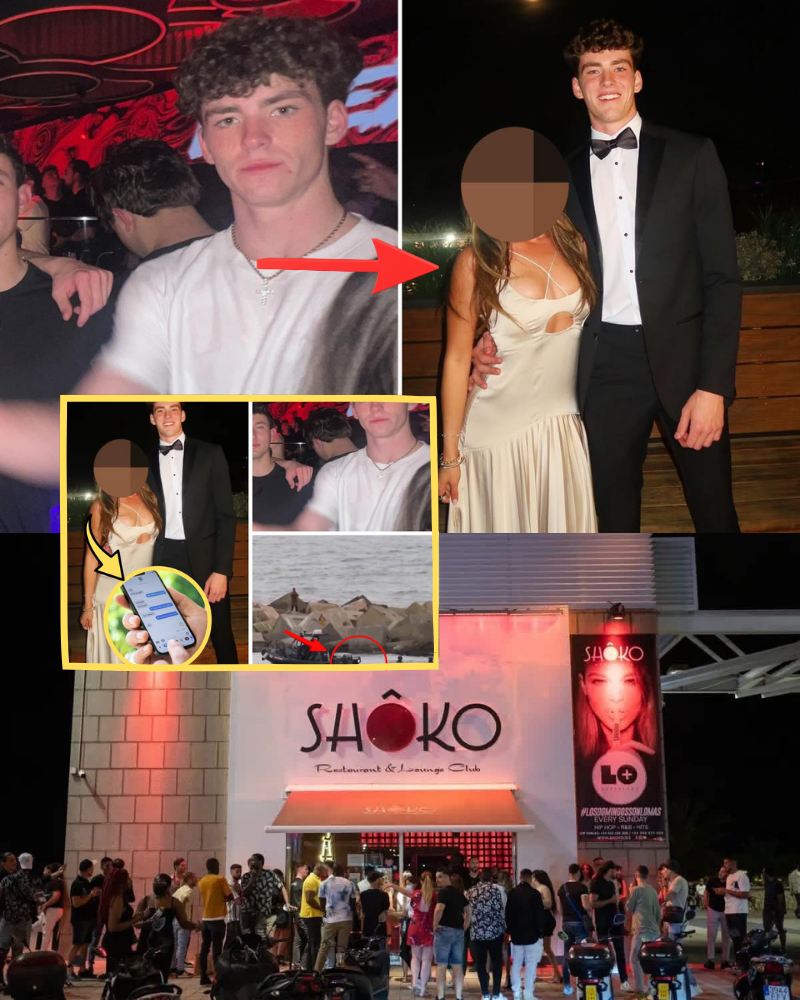
Behavioral analysts suggest that each individual has a unique “linguistic fingerprint”—a pattern of expression that remains consistent over time. When a sudden change occurs, especially at sensitive times, it can be a sign of interference or coercion. In Jimmy Gracey’s case, this very discrepancy made the 3:05 AM message the focus of many investigative theories.
Simultaneously, digital data related to Jimmy’s device is also being reviewed. Authorities are reportedly examining location history, app activity, and network access times to determine if the message was sent from the correct location and under normal conditions. These analyses, while complex, could help clarify whether there was third-party interference.
Another factor making this message noteworthy is the timing. 3:05 AM is an uncommon time for most users, unless there is a specific reason. According to his girlfriend, Jimmy didn’t usually text at this time, further increasing the anomaly. In this context, determining his whereabouts, what he was doing, and his state of mind at that time became the crucial question.
The story is not just about technical aspects or the investigation, but also clearly reflects the psychological state of those left behind. For Jimmy Gracey’s girlfriend, the message was not just a fact, but the last memory—a detail she constantly revisits, analyzes, and wonders if she missed anything. The feeling of “should have realized it sooner” is common in similar cases, even though these signs are often difficult to recognize at the time.
International public opinion is also closely following developments related to this detail. On social media, many people have offered different theories, from the possibility of the phone being hijacked to the possibility that Jimmy was under threat when he sent the message. However, authorities have yet to confirm any of the scenarios, and are urging the public to refrain from speculation before an official conclusion is reached.
Jimmy’s family, in recent statements, has also emphasized the importance of relying on verifiable information. They expressed hope that a thorough analysis of the last messages, along with other evidence, will help shed light on what truly happened in the time leading up to his disappearance. For them, every detail—no matter how small—could be the key to the truth.
From a broader perspective, Jimmy Gracey’s case illustrates the growing role of digital data in modern investigations. Messages, calls, and online traces are not just means of communication, but also evidence that can reconstruct a person’s final moments. However, interpreting this data requires caution, as it can be misinterpreted without context.
Currently, the biggest question remains unanswered: what really happened at 3:05 a.m. that day? Was that message the last from Jimmy himself, or a sign of something more serious unfolding? Until an official conclusion is reached, this detail will continue to be the focus of both the investigation and public attention.
Meanwhile, for those close to him…
For Jimmy Gracey’s girlfriend, the message became an inseparable part of her memory—a moment frozen in time, where everything seemed still reversible if understood correctly. But in reality, it wasn’t. And that’s what made it all the more haunting.
The investigation is ongoing, and more details may be revealed in the future. But for now, 3:05 AM is more than just a timestamp—it symbolizes an unanswered question, an ellipsis in an unfinished story, and perhaps the most crucial key to understanding the full truth behind this tragedy.
Để lại một bình luận