I knew something was wrong from the moment Emma moved in with us.
My husband Michael’s five-year-old daughter barely touched her food. Every evening, I placed a warm plate in front of her, knelt down to her eye level, and smiled gently.
She would lower her head and whisper the same words, night after night.
“Sorry, Mom… I’m not hungry.”
Her plate stayed full. Pasta. Rice. Chicken nuggets. Soup. Pancakes shaped like animals. Nothing worked.
At first, I blamed grief. Emma had lost her biological mother suddenly a year earlier. A child that young doesn’t understand death—only absence. I told myself she was mourning, adjusting, healing in her own way.
But my husband didn’t see it that way.
“She’ll get used to it,” Michael said every time I brought it up, eyes glued to his phone.
“Stop worrying so much.”
But I did worry.
Because Emma didn’t just refuse food—she feared it.
Her hands trembled when she held a fork. Her eyes flicked toward Michael before every bite, as if she needed permission to exist. When he raised his voice—even slightly—she flinched like she expected something worse.
One night, Michael snapped.
“Eat your dinner already!” he barked, slamming his hand on the table.
Emma froze.
She didn’t cry. She didn’t argue. She just shrank into herself, whispered “I’m sorry,” and ran to her bedroom.
That was the night I didn’t sleep.
Lying in the dark, staring at the ceiling, my mind replayed everything I had ignored:
The way Emma only relaxed when Michael left the room.
The way she breathed easier when he wasn’t home.
The way she ate slightly more at daycare—away from him.
Three days later, Michael left for a business trip.
The moment his car disappeared down the street, something changed.
Emma’s shoulders dropped. Literally dropped—like she’d been holding her breath for months. That afternoon, she took small bites of the sandwich I made. Not much, but enough to make my eyes burn with tears.
That night, as I cleaned the kitchen, I heard tiny footsteps behind me.
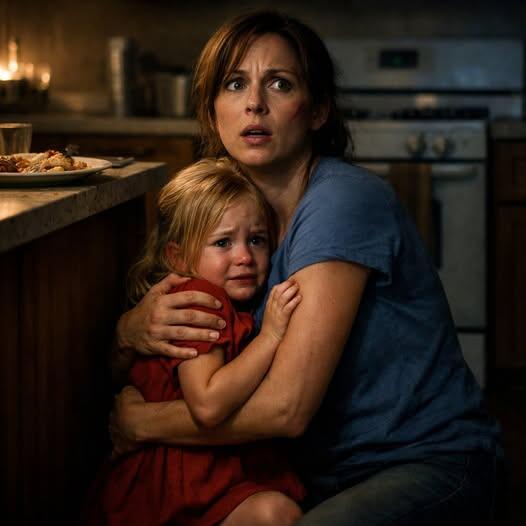
Emma stood in the doorway, barefoot, in her pajamas. Pale. Shaking.
“Mom…” she whispered.
“I need to tell you something.”
I turned off the sink immediately and knelt down.
“What is it, sweetheart?”
Her lip quivered. She looked toward the front door, even though Michael was miles away.
“I can only talk when Daddy isn’t watching,” she said.
My heart stopped.
She climbed into my arms like a frightened animal and whispered into my shoulder:
“Daddy says I’m bad if I eat.
He says Mommy died because she ate too much.
He says if I get fat, he won’t love me anymore.”
The world tilted.
Five years old.
Five.
I didn’t scream. I didn’t cry. I kissed her hair, held her tight, and whispered that she was safe.
Then I picked up my phone and called the police.
By morning, child protective services were at our door. Medical professionals confirmed severe emotional abuse and early signs of malnutrition. Investigators found messages, recordings, and a pattern that Michael couldn’t explain away.
He didn’t come back from that business trip to a family.
He came back to handcuffs.
Emma is in therapy now. She eats slowly. Carefully. Some days are still hard.
But last night, she looked at me after finishing her dinner and smiled.
“Mom,” she said, proud and shy,
“I think my tummy feels happy.”
And in that moment, I knew I had done the right thing.
Because loving a child doesn’t mean staying quiet.
Sometimes, it means being brave enough to make the call that changes everything.
Để lại một bình luận