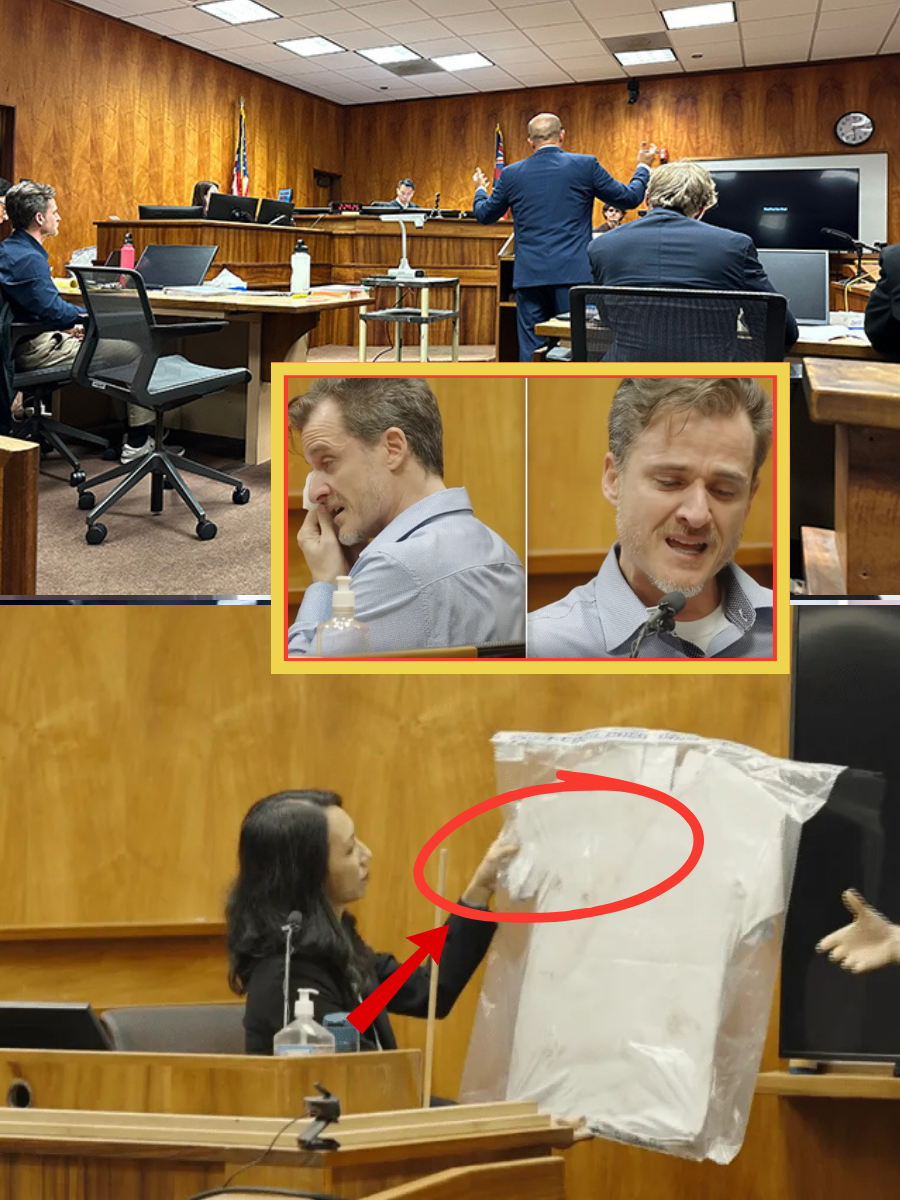
A pivotal moment has unfolded in the trial of Gerhardt Konig, as a 10-minute video presented in court is now being viewed as a potential turning point—one that could shape how jurors interpret the entire case.
Yet even as its impact is debated, legal observers are asking a deeper question: has the most decisive evidence already been shown, or is the trial only now entering its most critical phase?
The Video: A Continuous Record That Changes Perspective
Unlike fragmented testimony or reconstructed timelines, the 10-minute footage offers a continuous visual sequence—something jurors rarely get in cases built on seconds and partial observations.
According to courtroom accounts, the video captures:
- The environment and positioning leading up to the incident
- Subtle interactions between individuals involved
- The sequence of movements in real time
It does not present a single dramatic moment. Instead, its strength lies in continuity—allowing jurors to observe how events unfold without interruption.
Why It Matters to the Jury
Legal experts note that extended video evidence can carry disproportionate weight.
For jurors, it provides:
- A sense of direct observation rather than interpretation
- A timeline that feels more complete than witness recollection
- Visual context that can reinforce—or challenge—existing narratives
In this case, the footage is being closely examined not just for what it shows, but for what it suggests in combination with other evidence.
Interpretation Remains Divided
Despite its impact, the video has not resolved the central dispute.
Prosecutors argue that:
- The sequence reveals controlled positioning and timing
- Certain movements appear deliberate rather than incidental
- The overall pattern aligns with a theory of intent
The defense counters that:
- The terrain itself explains shifts in balance and movement
- No clear act of force is visible
- The footage remains open to multiple interpretations
This divergence highlights a key reality: video can clarify events—but not always intent.
A Trial Approaching Its Critical Threshold
With this footage now introduced, the trial appears to be approaching a decisive stage.
However, legal analysts caution that:
- Key testimonies may still follow
- Expert interpretations of the video could reshape its meaning
- Closing arguments will determine how all pieces are framed together
In many cases, the most influential moments come not from the evidence itself—but from how it is ultimately connected.
The Question That Defines the Case
Has the jury already seen the moment that will decide the verdict?
Or are they still waiting for the piece that will make everything clear?
For now, the 10-minute video stands as one of the most significant elements of the trial—powerful, continuous, and deeply scrutinized.
But in a case defined by seconds, even ten minutes may not be enough to answer the question at its core:
Was this a tragic accident—or something more deliberate, hidden within the details?
Để lại một bình luận