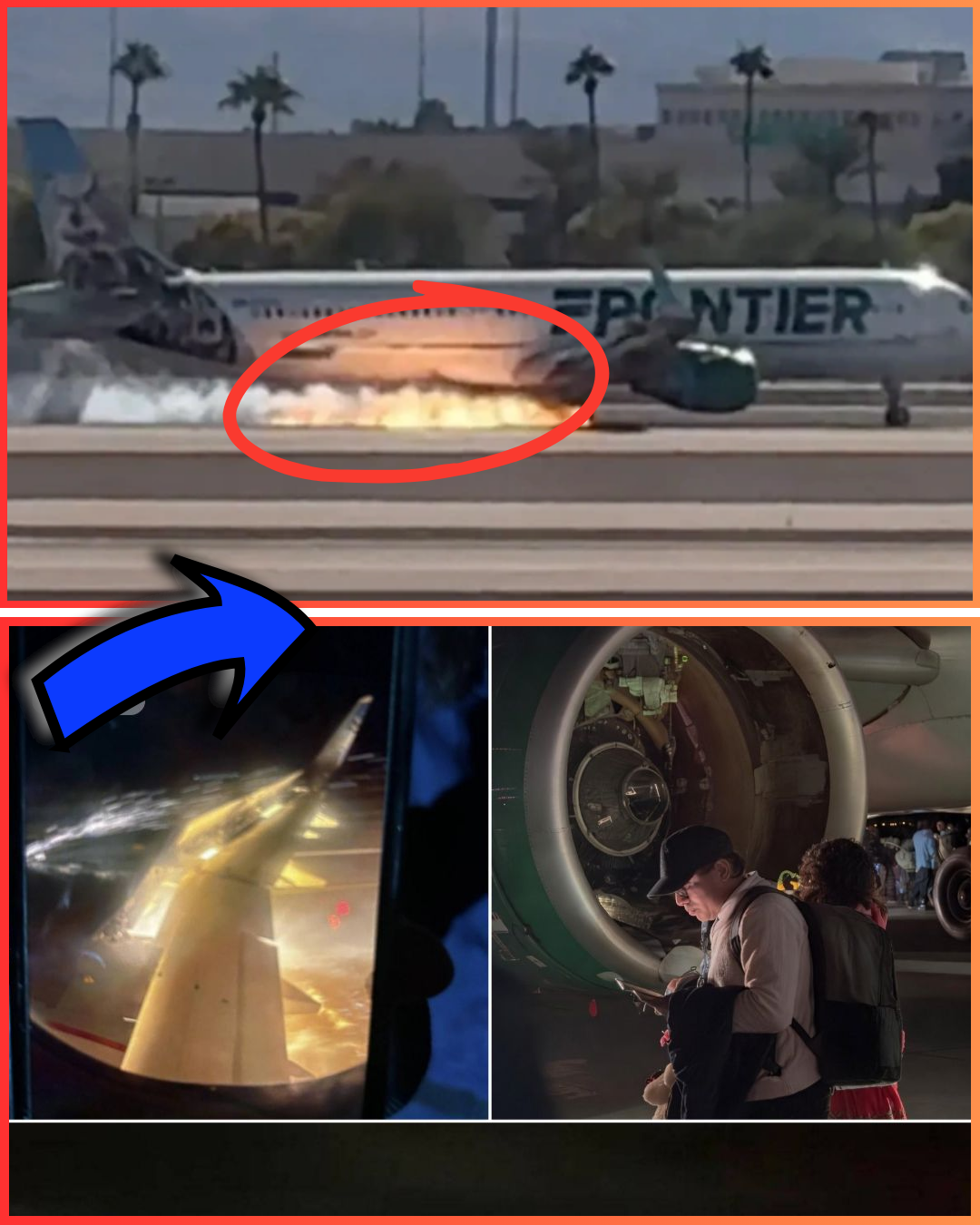
In the early hours of May 9, 2026, a routine departure from Denver International Airport (DEN) turned into a nightmare that has gripped aviation enthusiasts, passengers, and the public alike. Frontier Airlines Flight 4345, an Airbus A321neo bound for Los Angeles International Airport (LAX), was accelerating down Runway 17L when tragedy struck—literally. Air traffic control (ATC) recordings captured the pilots’ calm yet urgent voices as they reported hitting a person on the active runway, an engine fire, and the need for an immediate evacuation.
Sensational social media headlines have circulated a dramatic but slightly misquoted phrase—“We’re not stopping…”—amplifying the eerie tension of those final seconds before the crew rejected the takeoff. The actual transmission, according to multiple reports and ATC audio from sources like ATC.com, begins with: “Tower, Frontier 4345, we’re stopping on the runway. Uh, we just hit somebody… we have an engine fire.”
This incident, while not a traditional plane crash with mass fatalities onboard, has raised profound questions about airport perimeter security, human factors in high-speed operations, pilot decision-making under extreme duress, and the fragility of safety protocols even at major U.S. hubs.
Timeline of a Tragedy
The events unfolded around 11:19 p.m. MT on Friday, May 8, 2026. The aircraft, carrying 224 passengers and 7 crew members (totaling 231 souls on board), had received takeoff clearance. It accelerated to approximately 127 knots—roughly 146 mph—when the crew encountered the unthinkable: a pedestrian on the runway.
The unidentified individual had reportedly jumped a perimeter fence just two minutes earlier and was crossing the runway. At high speed, the Airbus struck the person, who was at least partially ingested into one of the engines. This caused a brief but intense engine fire and sent smoke billowing into the cabin.
Pilots immediately rejected the takeoff (RTO—Rejected Takeoff), applying maximum braking to bring the heavily loaded jet to a halt on the runway. The professionalism in the cockpit is evident in the audio: clear, concise communication with ATC, reporting souls on board, the nature of the emergency, and the decision to evacuate.
Smoke filled the cabin rapidly. Passengers described panic—oxygen masks did not deploy (as this was a ground event, not a depressurization), people covering their mouths, some suggesting breaking windows, and the chaos of an unexpected emergency evacuation. Inflatable slides were deployed, and passengers slid onto the tarmac in the dark. Denver Fire Department quickly extinguished the engine fire.
Twelve passengers reported minor injuries, with five transported to local hospitals. Most were later bused back to the terminal and rebooked on other flights. Miraculously, there were no serious injuries or fatalities among those onboard. The pedestrian, however, was killed.
The Human Element and Lingering Questions
The chilling aspect of the recordings lies not just in the words but in the calm professionalism contrasting with the horror of the situation. Pilots are trained for engine failures, bird strikes, and runway incursions, but a human being on the runway at takeoff thrust is extraordinarily rare and psychologically taxing. The ingestion of a person into a jet engine is the stuff of nightmares for aviation professionals.
Social media has exploded with theories. Some question how a perimeter breach could occur at a major airport like DEN. Others praise the pilots’ handling while wondering about the trespasser’s motives—suicide, disorientation, protest, or something more sinister? Authorities have confirmed the individual was not an airport employee and was not connected to ongoing work on a parallel runway. The person deliberately scaled the fence.
Denver International Airport, known for its vast size and sometimes labyrinthine layout, has faced scrutiny over perimeter security in the past, though major breaches are uncommon. Investigations by the NTSB, FAA, Transportation Security Administration (TSA), and local law enforcement are ongoing. Runway 17L remained closed for investigation.
Passenger accounts add vivid color to the reports. One described the sudden “boom,” flames, and smoke. Another recounted the struggle to breathe and the surreal sight of people recording on their phones amid the panic. The crew’s swift actions prevented a far worse outcome.
Broader Implications for Aviation Safety
This incident highlights several critical areas in modern aviation:
- Perimeter Security: Airports use fences, sensors, patrols, and sometimes AI-driven surveillance. A successful breach, even brief, at high speed on an active runway exposes vulnerabilities. DEN is one of the largest U.S. airports by area; securing every mile of perimeter is challenging but essential.
- Rejected Takeoff Dynamics: At 127 knots, rejecting takeoff is within the aircraft’s capabilities but stresses tires, brakes, and systems. The A321neo performed as designed, stopping safely.
- Engine Ingestion and Fire: Modern turbofan engines are incredibly powerful. Foreign object damage (FOD), especially at high thrust, can lead to rapid failure and fire. Fire suppression systems and quick response from ARFF (Aircraft Rescue and Fire Fighting) teams contained it.
- Crew Resource Management (CRM): The cockpit audio demonstrates excellent CRM—clear calls, coordination, and prioritization of evacuation. This will likely be studied as a positive example.
- Evacuation Realities: Even “successful” evacuations involve injuries from slides, smoke inhalation, and chaos. Regulatory standards for 90-second evacuations are tested in controlled conditions; real-world events are messier.
Frontier Airlines issued a statement expressing sadness and confirming cooperation with investigators. The NTSB is gathering information, with a full report expected to take months.
Public Reaction and the Viral Headline
The phrase “We’re not stopping…” appears to be a dramatic embellishment or slight mishearing that has fueled clickbait videos and posts. The real audio is somber and procedural rather than defiant. Yet it captures the split-second decision-making that defines aviation heroism. Pilots train relentlessly for these moments, but no simulator fully prepares one for striking a human at takeoff speed.
The incident has sparked broader conversations about mental health, airport trespassing laws, and the human cost of security lapses. For passengers on Flight 4345, what should have been a routine flight to LAX became a traumatic event they will carry for years.
As investigations continue, one thing is clear: the crew’s decisive actions saved hundreds of lives. In the high-stakes world of commercial aviation, where margins are razor-thin, their response stands as a testament to rigorous training and composure under pressure.
The final NTSB report will detail exact speeds, timelines, security footage analysis, and any systemic issues. Until then, the chilling recordings serve as a stark reminder that even in an era of advanced technology, human elements—both the trespasser’s desperate act and the pilots’ professionalism—can intersect with catastrophic potential.
Aviation remains one of the safest modes of transportation, thanks in large part to learning from rare but tragic events like this. Flight 4345’s story is not one of failure in the air, but a ground-level security and human tragedy that tested every layer of the system—and exposed where improvements are still needed.
Để lại một bình luận