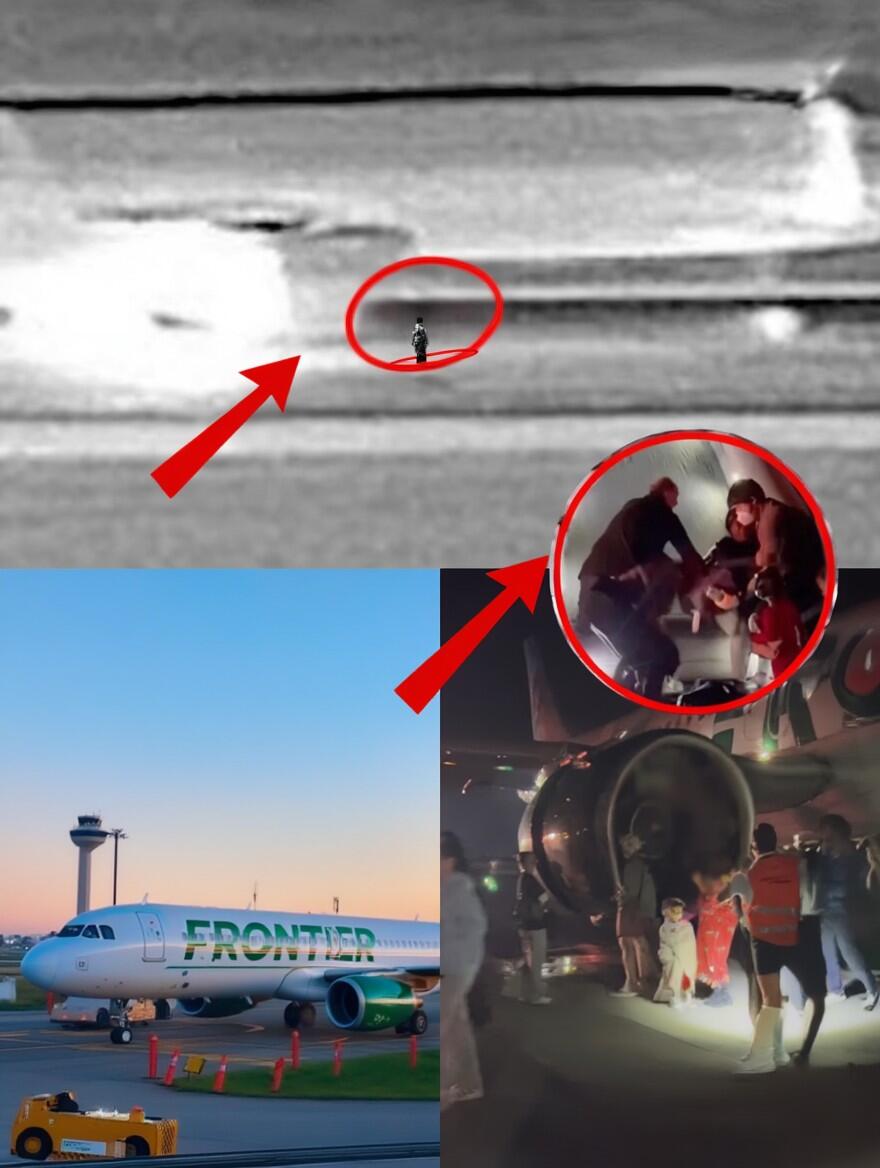
In the high-stakes world of commercial aviation, where split-second decisions separate routine flights from tragedy, a chilling phrase has captured the internet’s attention: “Pull up NOW!” Alleged cockpit voice recordings from a Frontier Airlines flight at Denver International Airport (DEN) have gone viral, fueling intense speculation, fear, and outrage across social media platforms. What was supposed to be a standard nighttime departure to Los Angeles turned into a horrifying incident that left one person dead, sparked an engine fire, forced an emergency evacuation, and raised serious questions about airport security and pilot response under extreme pressure.
The incident occurred around 11:19 p.m. MT on Friday, May 8, 2026. Frontier Airlines Flight 4345, an Airbus A321neo carrying 231 passengers and crew, was accelerating down the runway for takeoff when disaster struck—literally. A trespasser who had scaled a perimeter fence just minutes earlier wandered onto the active runway. The aircraft struck the individual at high speed during the takeoff roll.
The Moments of Impact
According to official statements from Denver International Airport and preliminary reports, the pilots immediately rejected the takeoff. Air traffic control (ATC) audio, which has been widely shared and analyzed online, captures the raw urgency in the cockpit. “Tower, Frontier 4345, we’re stopping on the runway. Uh, we just hit somebody… we have an engine fire,” one pilot reported, his voice steady but clearly strained.

Viral clips and discussions amplify claims of leaked or alleged cockpit voice recorder (CVR) excerpts featuring the Ground Proximity Warning System (GPWS) blaring “Pull up! Pull up!” or urgent crew commands like “Pull up NOW!” While investigators have not officially released full CVR transcripts—standard procedure in ongoing NTSB probes—the circulating audio has electrified online communities. Aviation enthusiasts, armchair investigators, and concerned travelers have dissected every second, debating crew actions, airport vulnerabilities, and the human cost.
Surveillance video released shortly after the event shows the disturbing scene: a figure walking across the runway as the jet bears down. The impact was catastrophic for the pedestrian, with reports of scattered remains and severe damage to the aircraft’s engine. Passengers described hearing a loud bang or explosion, followed by smoke filling the cabin. Children cried as flight attendants directed a rapid evacuation via slides. Twelve people sustained minor injuries, with five hospitalized.
What Investigators Have Revealed
The National Transportation Safety Board (NTSB), along with the FAA, Denver police, TSA, and airport authorities, quickly launched a multi-agency investigation. Key facts emerging include:
The individual jumped the airport perimeter fence approximately two minutes before the collision.
They were not an airport employee and had no apparent authorization to be in the secured area.
The pilots executed a rejected takeoff (RTO) promptly after impact.
An engine fire erupted but was extinguished by airport fire crews.
The aircraft came to a stop on the runway, allowing for a controlled but chaotic evacuation.
Aviation safety experts note that modern jets like the A321neo are designed with robust systems to handle such events. The GPWS and other warning systems provide critical alerts for terrain, traffic, and configuration issues. In this case, the primary threat was an obstacle on the runway during the most dynamic phase of flight—takeoff roll—when stopping or continuing requires precise judgment based on speed, runway remaining, and aircraft condition (the “V1” decision speed concept).
Online discussions have exploded with theories. Some claim the alleged cockpit audio reveals hesitation or panic, with phrases like “Pull up NOW!” interpreted as attempts to rotate early or clear an unseen hazard. Others praise the crew for maintaining professionalism amid horror. One viral post highlighted the pilots’ calm reporting of “limbs on the runway” while managing an engine fire and passenger safety.
This tragedy highlights persistent vulnerabilities in airport perimeter security, even at major hubs like DEN, one of the busiest in the U.S. Fences, sensors, patrols, and surveillance exist, yet breaches still occur. The incident echoes rare but devastating past runway incursions and ground accidents, though it stands out for involving a deliberate trespasser rather than navigational error or ATC miscommunication.
Frontier Airlines issued a statement confirming the flight number and expressing sympathy. The airline cooperated fully with authorities while emphasizing crew training in emergency procedures. For passengers, the psychological toll is significant. Accounts describe screams, prayers, and the acrid smell of smoke as people slid down emergency chutes into the night.
Aviation analysts point out that U.S. commercial aviation maintains an extraordinary safety record, with fatal accidents extremely rare thanks to layered defenses: pilot training, Crew Resource Management (CRM), technology like TCAS and GPWS, and rigorous maintenance. In this event, the crew’s actions prevented a potential high-speed overrun or worse. The “Pull up NOW!” urgency in alleged recordings underscores how automated systems and human decision-making intersect in crises.
Public Reaction and Viral Spread
Social media has amplified the story dramatically. Hashtags related to Frontier, Denver, and the audio clip have garnered millions of views. TikTok and YouTube feature breakdowns comparing it to famous CVR transcripts from past disasters like United 232 or Air France 447—though experts caution against direct parallels, as this was a ground event rather than in-flight loss of control.
Critics question how someone could access a runway so easily. Supporters of the crew highlight their composure. Conspiracy threads, predictably, have emerged, speculating about the trespasser’s motives or suppressed details. Responsible commentators urge waiting for the NTSB’s final report, which could take months and will include detailed analysis of flight data recorder (FDR), CVR (if applicable to public release), ATC tapes, and video.
Behind the headlines lies a profound human tragedy. The deceased remains unidentified publicly at the time of reporting, their reasons for entering the airfield unknown. For the pilots, witnessing and reporting the gruesome aftermath while flying an aircraft in distress represents an unimaginable burden. Passengers faced the terror of believing their flight was crashing.
This event serves as a stark reminder of aviation’s inherent risks, even on the ground. It may prompt reviews of perimeter security technologies—AI-enhanced cameras, ground sensors, drone patrols—and reinforced crew training for runway obstacle scenarios. Airlines and regulators continually evolve procedures based on such incidents to prevent recurrence.
As shockwaves from the alleged audio continue rippling online, one thing is clear: the crew’s swift actions likely averted greater loss of life. “Pull up NOW!”—whether a literal warning call, GPWS alert, or dramatized in viral narratives—symbolizes the razor-thin margin between normal operations and catastrophe in aviation.
The full investigation will clarify the sequence, audio authenticity, and contributing factors. In the meantime, the story of Frontier Flight 4345 stands as both a cautionary tale and a testament to the professionalism that keeps millions flying safely each day. As travelers book their next flights, many will pause, reflecting on the invisible web of safety measures—and the human beings behind them—that make modern air travel possible.
Để lại một bình luận