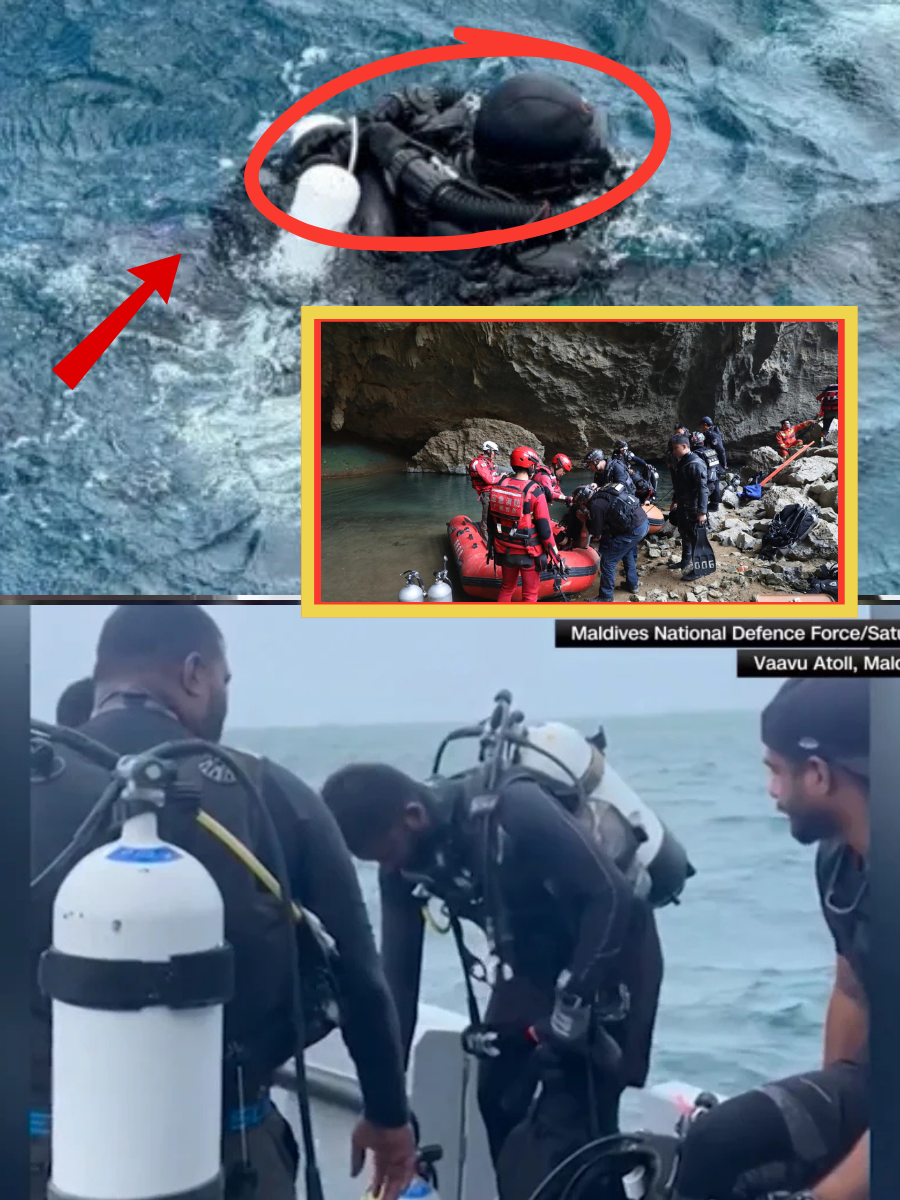
The only person who did not enter the water may now hold one of the most important pieces of the Maldives cave-diving investigation.
A claim circulating online suggests that the sole survivor of the Italian diving group abandoned the fatal dive because of “bad weather” and later revealed deep personal tensions among the victims. Authorities have not confirmed any such allegation. There is no official evidence that hatred, conflict, or a dispute between the divers caused the tragedy.
But the survivor’s decision not to dive remains a crucial part of the timeline.
Five Italian divers died after entering an underwater cave system near Vaavu Atoll on May 14, 2026. Their bodies were eventually recovered from the cave area, with several found around 60 meters deep, far below the Maldives’ permitted recreational diving limit. The final two bodies were recovered on May 20, ending the recovery mission but not the investigation.
The victims included University of Genoa marine ecologist Monica Montefalcone, her daughter Giorgia Sommacal, researcher Muriel Oddenino, marine biology graduate Federico Gualtieri, and instructor Gianluca Benedetti. The group had permission to study soft corals at the Devana Kandu site, but Reuters reported that officials are now investigating whether the divers descended deeper than intended.
Weather has already emerged as an important factor. Italian Foreign Minister Antonio Tajani said searches were suspended because of bad weather, and other reports noted rough seas and yellow warnings that complicated rescue efforts. But bad weather alone does not explain what happened inside the cave.
That is why investigators would likely examine the survivor’s account carefully.
Why did she choose not to enter the water?
Was the decision made because of surface conditions, personal unease, equipment concerns, or something she observed in the group before the dive?
Did the victims argue about the route, the depth, the permit, or whether the cave should be entered at all?
At this stage, none of those questions has been answered publicly.
The theory that a hidden conflict between the divers led to their deaths remains unverified. It is also a serious allegation. Without police statements, witness testimony, phone records, or forensic evidence, it should not be treated as fact.
Still, investigators often look closely at interpersonal dynamics after a fatal group expedition. Not because conflict automatically means crime, but because disagreements can affect decisions: whether to proceed in poor conditions, who leads the dive, whether to turn back, and how much risk the group is willing to accept.
In this case, the known risk factors were already severe.
The cave was deep. The route was enclosed. The divers were operating far below normal recreational limits. AP reported that at least two members of the group were not listed on the official expedition documents, raising questions about planning and oversight.
The recovery mission itself turned deadly. A Maldivian military diver involved in the search died from decompression illness, and Finnish technical cave divers were later brought in with advanced closed-circuit rebreathers to recover the remaining bodies.
For now, the survivor’s decision may be less evidence of a secret feud than evidence of hesitation.
Someone saw enough to stay behind.
That does not prove the victims were fighting. It does not prove anyone was betrayed. But it does make her testimony important, because she may be the last person who saw the group alive before the descent.
The official investigation will need to determine whether the tragedy was caused by weather, depth, equipment, gas exposure, cave conditions, human error, or a combination of all of them.
Until then, the most responsible conclusion is also the most haunting one:
Five divers entered the cave.
One person did not.
And the reason she stayed behind may be one of the last unanswered questions in the Maldives disaster.
Để lại một bình luận