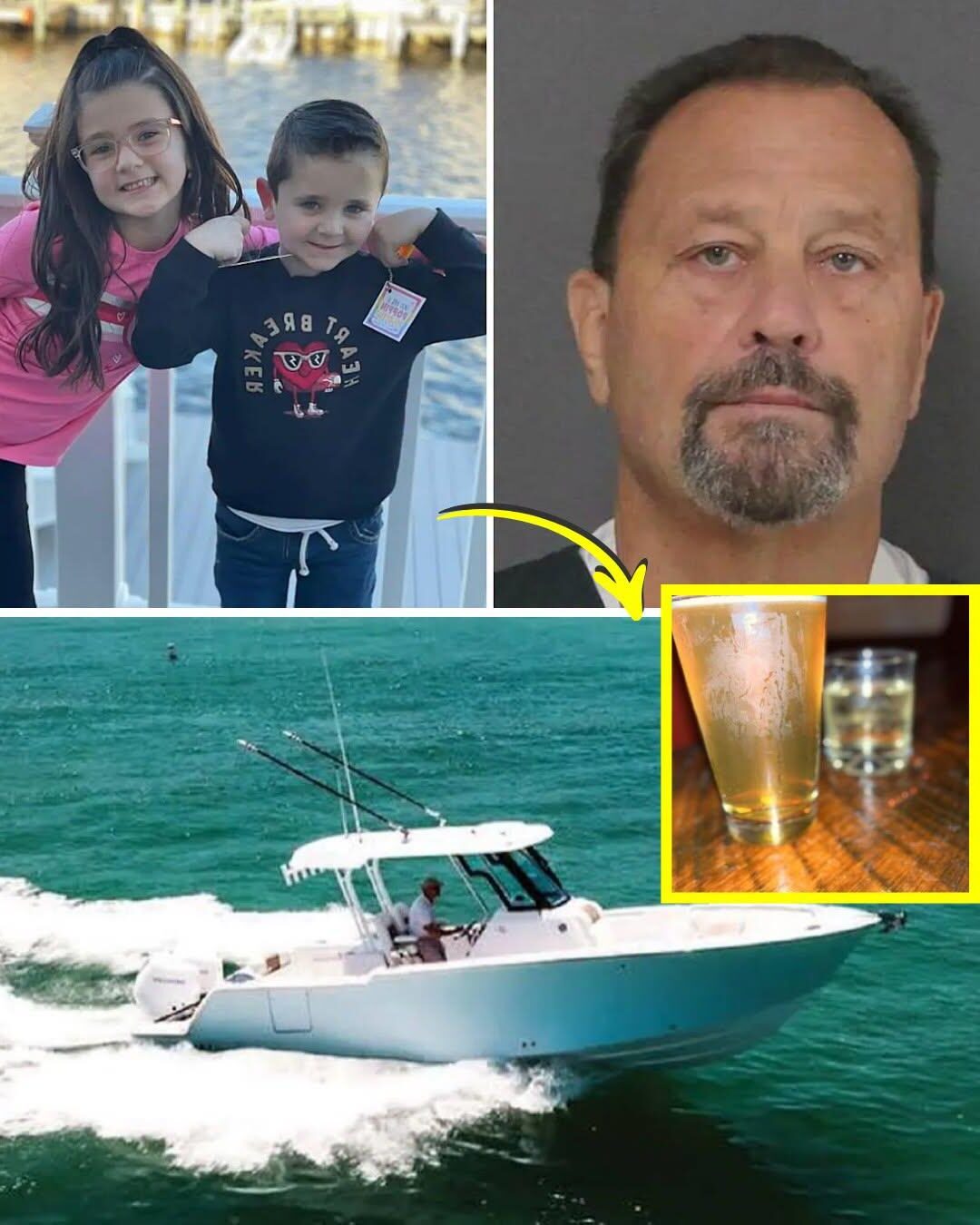
Stephen Schneider did not give investigators a vague answer about drinking before the fatal boat trip. He reportedly named the beers and gave a specific account of how much he consumed — and that precision may be exactly what makes his version of events possible to check. Now receipts, restaurant records, staff recollections and other evidence could help determine whether the “three beers” account matches what actually happened that night.
It was not simply:
“I had a few drinks.”
According to the account described in the case, Stephen Schneider was much more specific.
He reportedly told police what he had been drinking and described the quantity.
That may sound like a small detail.
But in a criminal investigation, specificity can become a double-edged sword.
The more precise the account, the more opportunities investigators have to test it.
And suddenly, the story of three beers was no longer based solely on one man’s memory.
The statement that created a trail
Schneider’s reported account potentially gave investigators several points to investigate.
What type of beer was ordered?
How many were served?
When were they ordered?
Who served them?
Who was sitting at the table?
And when did Schneider leave the restaurant?
Each question could produce another piece of evidence.
A receipt could establish a purchase.
A server could remember an order.
A restaurant system could record the transaction.
Surveillance footage could potentially establish when drinks arrived or when the group left.
The account could therefore be tested from multiple directions.
Why “three beers” matters
There is an enormous difference between saying:
“I drank some beer.”
and saying:
“I drank three beers.”
The first statement is difficult to verify precisely.
The second creates a measurable claim.
If investigators can establish that four, five or more drinks were served to Schneider, his account could face an obvious challenge.
If records support three, however, that could provide independent corroboration for part of his statement.
Neither outcome would, by itself, resolve the entire case.
But it could strengthen or weaken one element of the timeline.
The table may become a crucial source of evidence
Schneider reportedly was not alone during the meal.
Family members were present.
That means investigators potentially have several witnesses who could describe what they saw.
Did Schneider order the beers himself?
How quickly did he drink them?
Did anyone notice a change in his behavior?
Was another alcoholic drink ordered?
And when did he leave the restaurant?
These questions could become increasingly important when compared with the reported blood-alcohol result.
Then there is the laboratory figure
The investigation also involves a reported BAC of approximately 0.16%.
That figure has created a striking contrast with Schneider’s reported description of his drinking.
But investigators cannot simply look at the number and assume it tells them everything.
They must consider the timing of the blood sample and the circumstances surrounding it.
They must also examine the complete sequence of events leading to the collision.
That is why the restaurant timeline could matter.
The clock could tell a different story
Imagine investigators reconstructing the evening minute by minute.
A drink is ordered.
A receipt is generated.
Another drink arrives.
The group finishes dinner.
The family leaves.
The boat departs.
Then, later, the collision occurs.
Each timestamp becomes another piece of evidence.
And the more accurately investigators can reconstruct that sequence, the easier it becomes to compare Schneider’s recollection with independently recorded information.
What the staff could remember
Restaurant employees can sometimes provide details that family members may not notice.
A server may remember who ordered a particular drink.
Another employee may remember when the group arrived or departed.
A payment record may establish when the transaction occurred.
Surveillance footage may provide additional context.
None of these details should automatically be treated as proof of intoxication.
But they can help establish what happened before the boat trip.
The dangerous assumption about memory
There is another possibility investigators must consider.
Schneider’s account could have been sincere even if some details were inaccurate.
Memory can be imperfect.
People may remember what they drank while forgetting an additional beverage.
They may remember the type of drink but misremember the timing.
That is precisely why investigators rely on corroborating evidence whenever possible.
The question is not simply whether Schneider remembers three beers.
It is whether the available evidence supports that memory.
One statement, multiple ways to test it
That is what makes the reported account so interesting.
Investigators do not necessarily have to choose between believing Schneider and rejecting him.
They can test the individual components of his story.
Three beers.
Specific types.
A specific period of time.
A specific restaurant.
Each claim potentially creates its own evidentiary trail.
And those trails can be compared.
The boat trip changed everything
Whatever happened at the restaurant ultimately preceded a devastating nighttime boat trip.
Mya, 9, and Sigmund, 7, were reportedly aboard when the vessel struck a fixed navigation marker and the children were thrown into Barnegat Bay.
The tragedy means that seemingly ordinary details from earlier that evening have taken on enormous significance.
A drink order that might otherwise have been forgotten can suddenly become part of a criminal investigation.
A receipt can become evidence.
A witness’s memory can become important.
A timestamp can become crucial.
The story can no longer rely on memory alone
That may be the most important consequence of Schneider’s specificity.
By providing investigators with a detailed account, he potentially gave them a roadmap for verification.
If the records match, that matters.
If they do not, that matters too.
Either way, the evidence can be compared against the recollection.
And that is where the case moves beyond competing stories.
What investigators will ultimately want to know
The central question is not simply whether Schneider remembers drinking three beers.
It is whether the evidence can independently establish what he consumed and when.
Investigators could potentially examine:
- restaurant receipts;
- electronic payment records;
- staff testimony;
- statements from family members;
- surveillance footage;
- the timing of the boat departure;
- and the reported toxicology results.
Together, those details could provide a much clearer picture of the evening.
The detail that could become a problem
Schneider’s specificity may therefore be both his strongest and most vulnerable point.
A vague statement leaves little to check.
A precise statement leaves a trail.
And investigators now have the opportunity to follow that trail.
Every receipt.
Every service time.
Every witness.
Every available image.
Every minute.
The more independently documented information investigators uncover, the less the story depends on memory alone.
The question that remains
Stephen Schneider reportedly knew exactly what he told investigators he had consumed.
But now the evidence has an opportunity to answer a much bigger question:
Did the records of that evening tell the same story?
If they do, his account could gain credibility on that particular point.
If they do not, investigators will have to determine why.
And with a reported BAC of approximately 0.16% forming a major part of the case, that seemingly simple claim about three beers could prove far more significant than anyone initially expected.
Because sometimes, the smallest detail is the easiest one to check.
And once investigators start checking it, the memory of one man’s evening becomes a timeline that can be tested minute by minute.
Để lại một bình luận