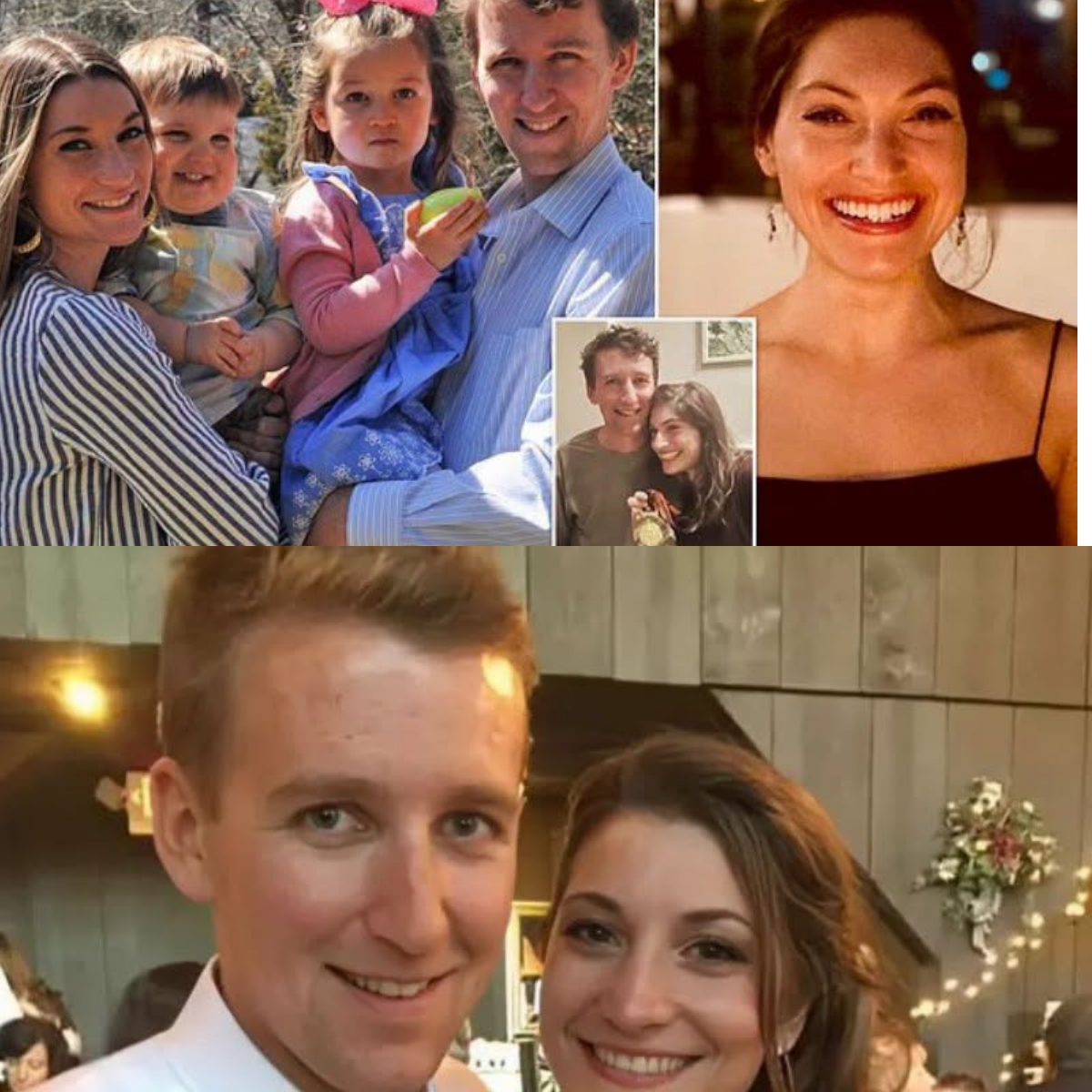

Long before the emergency sirens cut through the freezing dusk on Summer Street in Duxbury, Massachusetts, those who lived closest to the Clancy family knew something was deeply, inexplicably wrong. To the outside world, Lindsay Clancy was the picture of suburban success: a compassionate 32-year-old labor and delivery nurse at Massachusetts General Hospital, a devoted wife to her husband Patrick, and a vibrant mother of three beautiful young children—five-year-old Cora, three-year-old Dawson, and eight-month-old Callan. Inside her tight-knit coastal neighborhood, however, the woman residents saw in the late autumn and early winter months of 2022 was rapidly vanishing, replaced by a hollow shell of a mother visibly drowning under the weight of severe postpartum depression, anxiety, and a relentless, ever-shifting cocktail of prescription medications.
Now, as court proceedings unfold and the horror of January 24, 2023, remains etched into the community’s conscience, local residents and close observers are breaking their silence. Their accounts detail subtle shifts, unsettling encounters, and the terrifying trajectory of a mother spiraling downward. Their haunting memories raise a furious, lingering question that echoes through the quiet streets of Duxbury: How did a woman receiving regular professional care slip through the cracks of a system meant to protect her, and could this unimaginable tragedy have been prevented?
For years, the Clancy household was defined by warmth. Neighbors frequently saw Lindsay pushing strollers down the suburban cul-de-sacs, smiling warmly, and greeting fellow residents as a deeply caring healthcare worker who adored her family. However, following the birth of her youngest child, Callan, in May 2022, a subtle darkness began to take hold. Neighbors who interacted with Lindsay in the months leading up to the tragedy recall a marked transformation, noting that the bright, highly attentive mother began to look physically and emotionally drained. One community member recalled that she simply wasn’t the same, explaining that the light in her eyes was completely gone and that she moved as if through quicksand, staring right through people while completely detached from everything around her. Those close to the family witnessed Lindsay battle a terrifying barrage of symptoms including crippling insomnia, intrusive thoughts, profound panic, and severe depersonalization, leaving her trapped in an escalating mental health crisis despite her active medical background.
Central to the outrage surrounding the case is the staggering volume of pharmaceutical drugs prescribed to Lindsay Clancy in the months preceding the tragedy. Defense records and court testimony revealed that between October 2022 and January 2023, Lindsay was prescribed a swirling carousel of twelve different psychiatric medications, including powerful antidepressants like Prozac and Zoloft, anti-anxiety medications such as Klonopin, Valium, and Ativan, sedatives like Ambien and Remeron, as well as antipsychotics and mood stabilizers like Seroquel, Lamictal, and Trazodone. Defense attorney Kevin Reddington argued passionately that this rapid sequence of medication changes did not heal Lindsay but severely altered her mind, effectively turning her into a zombie stripped of normal emotional processing. Neighbors and community members who crossed paths with Lindsay during this window witnessed her flat affect, slowed speech, and lethargic movements, observing that the rapidly changing dosages appeared to aggravate her confusion, insomnia, and underlying psychological distress rather than stabilizing her.
On the evening of January 24, 2023, the crisis reached a horrifying crescendo when Patrick Clancy briefly left the family home to pick up takeout dinner and prescription medicine from a local pharmacy, an errand lasting less than 25 minutes. During that brief window, Lindsay, allegedly experiencing a severe episode of postpartum psychosis driven by auditory hallucinations, strangled her three children in the basement using exercise bands before slashing her wrists and jumping from a second-story window in an attempt to end her own life. When Patrick returned home to an eerie silence, his desperate 911 call captured the sheer agony of a father discovering the unthinkable. Lindsay survived the fall but suffered severe spinal injuries that left her permanently paralyzed from the waist down, while Cora and Dawson were pronounced dead at the scene, and eight-month-old Callan succumbed to his injuries days later at Boston Children’s Hospital, sending shockwaves across the nation.
As prosecutors pursued formal charges of first-degree murder, strangulation, and assault, a fierce debate erupted over how justice should be defined in a case shaped by severe illness. Prosecutors argued that Lindsay acted with deliberate calculation, pointing to her search history, timing, and outward ability to manage basic daily tasks without demonstrating clear clinical signs of psychosis during routine checkups. Conversely, many neighbors and mental health advocates strongly rejected the idea of traditional incarceration, arguing that Lindsay suffered from undiagnosed bipolar disorder and severe postpartum psychosis exacerbated by extreme overmedication, insisting that committing her to a secure psychiatric treatment facility was the only compassionate response. Even Patrick Clancy, in an extraordinary display of grace, issued a public statement begging the public to forgive his wife, writing that the real Lindsay was generously loving and caring towards everyone, and that he wished only for her to somehow find peace.
The haunting memories of Duxbury residents continue to spark a furious national conversation regarding maternal healthcare in America, raising painful questions about how a respected nurse could fall through the safety net while actively seeking professional psychiatric treatment. Experts in perinatal mental health point to systemic flaws, such as the dangerous practice of polypharmacy where multiple psychiatric drugs are rapidly stacked or switched without adequate time to assess side effects, and diagnostic blind spots where standard postpartum depression screenings miss signs of psychosis or intrusive homicidal ideation. The failure is further highlighted by the fact that shortly before the tragedy, Lindsay had voluntarily checked herself into McLean Hospital, a renowned psychiatric facility, only to be discharged five days later when clinicians deemed her not actively suicidal or homicidal. For those who walked the same streets as Lindsay Clancy, the sight of her quiet Duxbury home remains a painful monument to what could have been, leaving a community wrestling with the devastating knowledge that her tragic decline happened in plain sight.
Để lại một bình luận