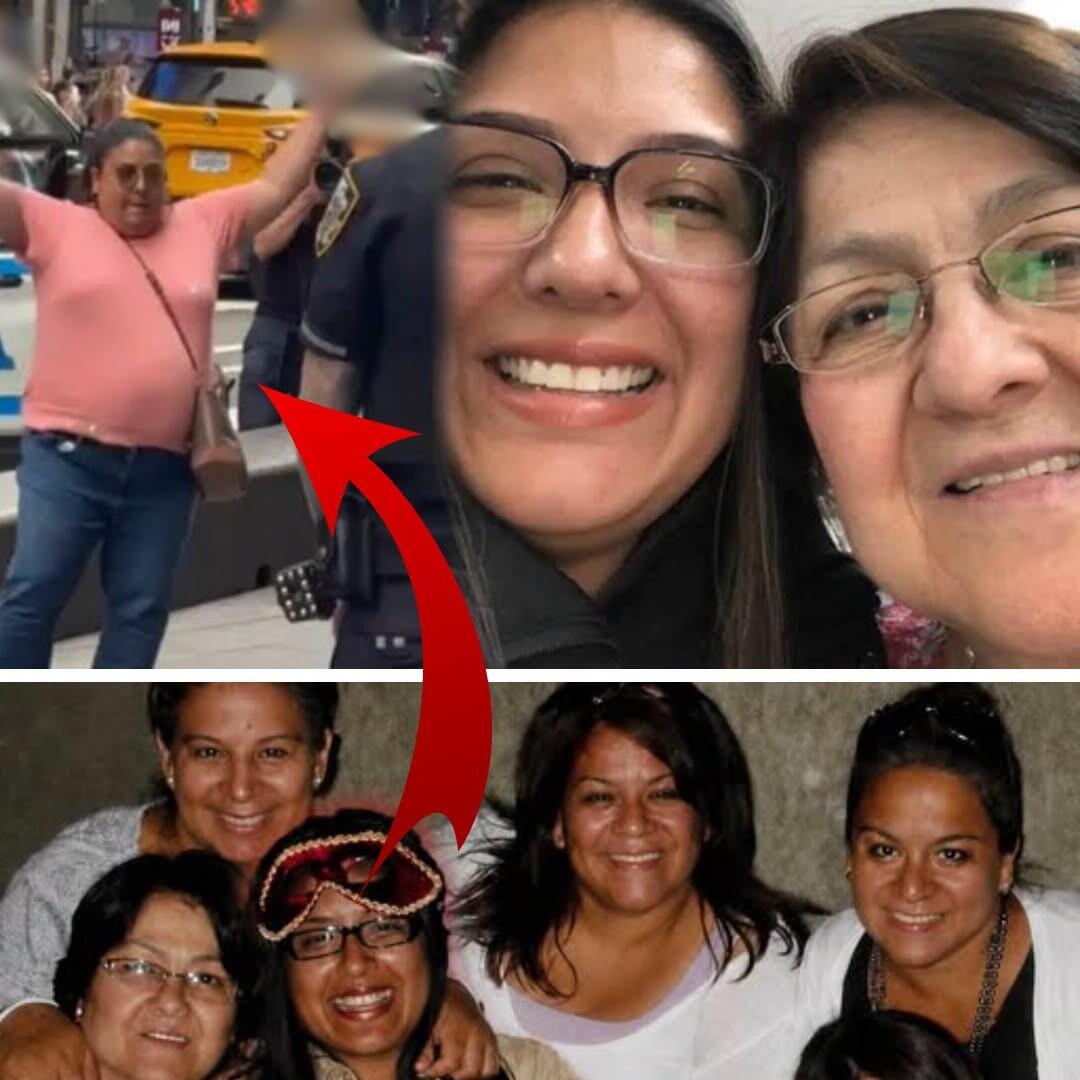
“Why Didn’t They Just Hold Her?”: Mother’s Question Keeps Times Square Shooting Under Scrutiny
On a bright late-summer afternoon in the heart of New York, the Crossroads of the World became the stage for a rapid and deadly sequence of events that left one woman dead from stab wounds, another man seriously injured, and a third woman shot by police. Pamela Cisneros, 49, of Queens, was killed by NYPD officers after she attacked two strangers with kitchen knives and then refused to drop the weapons during a tense four-minute standoff. Her mother’s pointed question—“Why didn’t they just hold her?”—has become a refrain that continues to fuel debate over whether lethal force was the only remaining option.
According to Police Commissioner Jessica Tisch and official accounts, the violence unfolded with startling speed shortly after 4:24 p.m. on August 31, 2026. Cisneros pulled two kitchen knives from a red Target shopping bag near West 41st Street and Seventh Avenue. She first stabbed Tak Kam, 68, a visitor from Kingston, Rhode Island, in the abdomen as he waited with his wife to cross the street. Within roughly 20 seconds she continued north and fatally stabbed Erin Piacenti, 32, a Bank of America vice president from Chester, New Jersey, who was heading home from work. Piacenti, a recent mother, later died at Bellevue Hospital. Kam survived and was treated for his injuries.
Officers located Cisneros a short distance away, between West 42nd and 43rd Streets near an NYPD substation on Seventh Avenue. She still held a knife in each hand. A group of officers formed a semicircle around her at a distance of about 10 feet. For approximately four minutes they engaged her in dialogue, repeatedly ordering her to drop the knives. According to Tisch, Cisneros refused. She told the officers, “I’m not dropping anything. I would rather kill both of you,” and repeated, “I will kill you.” Multiple officers then discharged Tasers. The shocks had no apparent effect. Cisneros began waving the knives and advanced toward the officers. Two of them opened fire. She was taken to Bellevue Hospital and pronounced dead.
Videos recorded by bystanders and later circulating widely show the final moments of the confrontation in graphic detail. Cisneros appears to come within a few feet of the officers when the shots are fired. Seventh Avenue remained open to traffic behind her; cars, taxis, and pedestrians can be seen moving past even as the standoff reached its climax. Some policing experts have described the shooting as justified given the immediate threat posed by an armed person who had already stabbed two people and was advancing while making explicit threats. Others have questioned tactical decisions, including the failure to fully close the roadway and the risk that officers or bystanders stood in the line of fire.
Cisneros’s family views the same events through a different lens. In an interview with Fox 5 New York, her mother asked the question that has lingered: “There were so many police… why didn’t they grab her by the arm?” The mother, who did not publicly give her full name in some reports, expressed anguish that lethal force was used when multiple officers were present. Family members have described Cisneros as someone who had long struggled with serious mental illness, including bipolar disorder and postpartum depression after the birth of one of her three daughters. Her brother, Patrick Peralta, said she had never shown violence toward others before that afternoon. “She’s never been violent,” he told reporters. Her father recalled a suicide attempt years earlier in which she tried to jump in front of a subway train. Relatives said she had been receiving treatment, though it was unclear whether she was taking medication consistently in the days leading up to the attacks. They portrayed a woman who, until that Monday, had not been known as a danger to the public.
The contrast between the official narrative and the family’s perspective has kept the case alive in public discussion. Authorities emphasize the concrete threats Cisneros made, the failure of less-lethal options, and the fact that she was actively advancing with weapons after already committing serious violence. The family emphasizes the number of officers present, the relatively short distance involved, and the possibility that physical restraint or other intermediate measures might have been attempted. Mental health advocates have used the incident to highlight broader challenges in responding to people in crisis, particularly in crowded public spaces where time and options can collapse quickly.
The New York attorney general’s office, which by state law investigates civilian deaths in encounters with law enforcement, has opened an inquiry into the shooting. Body-worn camera footage from the officers involved is expected to play a central role. That video, not yet fully released to the public at the time of early reporting, captures the dialogue, the Taser deployments, the moment Cisneros moved forward, and the decision to fire. Investigators will examine the sequence second by second: how long officers continued verbal commands after the Tasers failed, the exact distance at the moment shots were fired, whether other less-lethal tools were available or considered, and whether the surrounding environment—open traffic, pedestrians, and fellow officers—constrained the available choices.
Policing experts who reviewed bystander video have offered mixed assessments. Several said the decision to shoot once Cisneros closed the distance while still armed and threatening was consistent with training that prioritizes stopping an imminent lethal threat. Knives can kill in seconds at close range, they noted, and multiple Taser deployments had already failed. At the same time, some criticized the semicircle formation and the decision to engage while traffic continued to flow behind the subject, creating potential crossfire risks. One retired officer observed that the open roadway behind Cisneros left officers with limited space to maneuver or create additional distance.
The victims’ stories add further weight to the tragedy. Piacenti was a working professional and new mother whose life ended in a random attack on a busy Manhattan sidewalk. Kam, visiting the city, survived a sudden and unprovoked stabbing. Their experiences underscore the suddenness with which ordinary moments in one of the world’s most visited locations can turn catastrophic.
As the formal investigation proceeds, the mother’s question continues to resonate because it crystallizes a deeper tension in modern policing: how to balance the immediate need to neutralize a dangerous threat with the desire to preserve life when the subject is also a person in evident mental distress. Bodycam footage may clarify the precise sequence of the final seconds and whether any realistic alternative remained once Cisneros advanced. Until that evidence is fully examined and released, the debate over those four minutes in Times Square is unlikely to fade. The images of officers surrounding a woman with knives in both hands, the sound of commands ignored, the ineffective Tasers, and the shots that ended the confrontation will remain the central record against which every claim—official and familial—is measured.
Để lại một bình luận