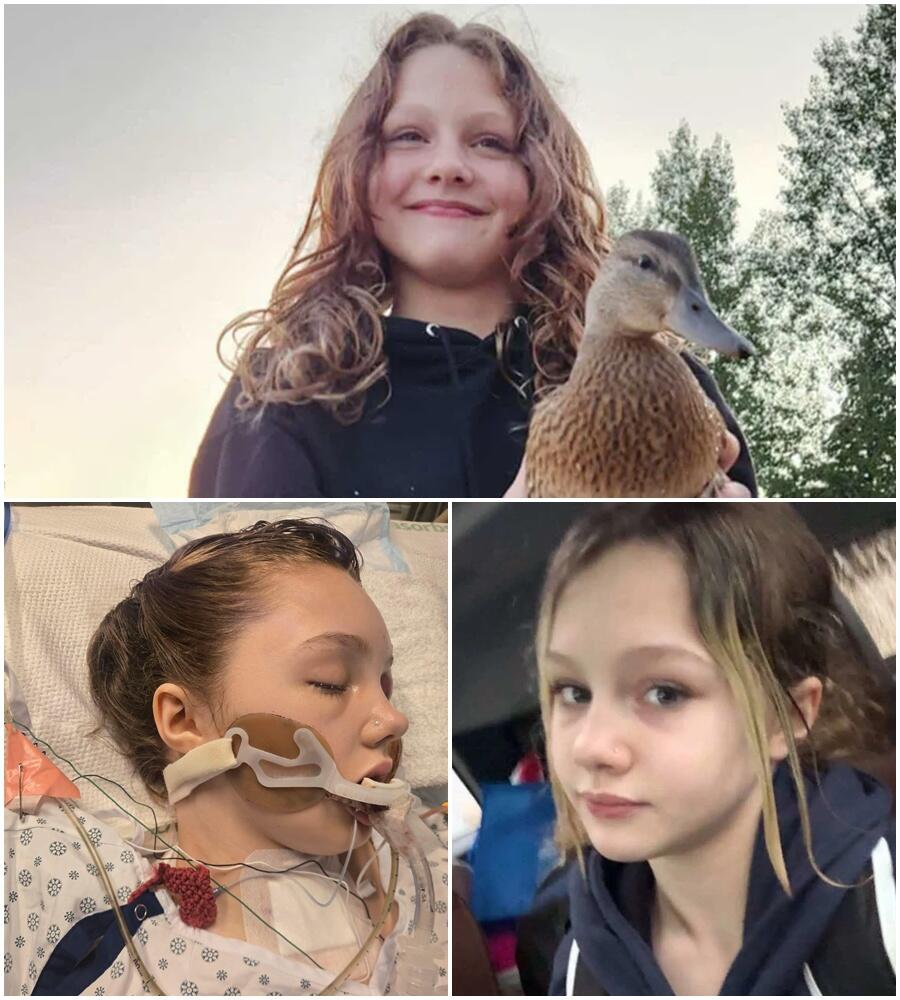
The heartbreaking plea from a mother’s social media post has resonated across the world: “I Never Imagined I’d Be Begging Like This… Please, Pray for My Child.” These words, shared by Cia Edmonds, capture the raw desperation of a parent watching her 12-year-old daughter fight for survival after a devastating school shooting in the remote Canadian town of Tumbler Ridge, British Columbia.
On February 10, 2026, the quiet community of Tumbler Ridge—home to just a few thousand residents—was shattered by one of Canada’s deadliest school shootings in recent history. The suspect, 18-year-old Jesse Van Rootselaar, who had previously attended Tumbler Ridge Secondary School but dropped out years earlier, carried out a calculated attack. Police reports indicate that Van Rootselaar first killed her mother and 11-year-old half-brother at their home before heading to the school. There, during what should have been a routine school day, the shooter opened fire, killing six people at the school—including a 39-year-old education assistant and five students aged 12 and 13—and injuring more than two dozen others. The rampage ended when the suspect died from a self-inflicted wound.
Among the wounded was 12-year-old Maya Gebala (also referred to in some reports as Maya Edmonds, reflecting her mother’s surname). Maya sustained life-threatening gunshot wounds to the head and neck. According to accounts from family members and witnesses, Maya displayed extraordinary courage during the chaos. As the shooter approached the school library, Maya attempted to protect her classmates by trying to lock the door or shield others. In the process, she was struck multiple times—one bullet above her left eye penetrating her brain, and another to her neck, with uncertainty about whether it passed through or remained lodged internally.
Air-lifted urgently to BC Children’s Hospital in Vancouver, Maya arrived in critical condition. Doctors performed emergency surgery to address brain bleeding and other damage, but the prognosis was grim. Her mother, Cia Edmonds, shared a poignant update from the hospital room: the medical team had warned that the brain injuries were too severe for survival, and Maya might not make it through the night. Hooked to life support machines, unable to breathe independently, and placed in a medically induced coma to reduce swelling and give her body a chance to stabilize, Maya clung to life against overwhelming odds.
In her Facebook posts, Edmonds expressed the surreal horror of the situation. “This doesn’t even feel real,” she wrote. “Today started as any other. Now, however, my 12-year-old daughter is fighting for her life while they try to repair the damage from a gunshot wound to the head.” She described sitting vigil by Maya’s bedside, staring at her daughter’s face amid the beeps of monitors and the quiet hum of hope. “Our baby needs a miracle,” she pleaded, begging the community and beyond for prayers. A GoFundMe campaign launched by a relative quickly gained traction, aimed at supporting Maya’s long and uncertain road to recovery—costs that could include extended hospital stays, potential rehabilitation, and lifelong care if she survives.
The Tumbler Ridge shooting stands out in Canada’s relatively low incidence of such events, thanks to stricter gun laws compared to the United States. Yet this tragedy has reignited national conversations about mental health, gun access (even in a country with rigorous controls), and school safety. Police noted that Van Rootselaar had a history of mental health concerns, with prior visits from officers to her residence. The motive remains under investigation, but the attack’s targeting of young children has left an indelible scar on the community.
In the days following the shooting, updates from Maya’s family offered glimmers of hope amid the despair. By the second day, she had survived the critical first night. Subsequent posts reported small but meaningful signs of progress: slight movements, responses to stimuli, a kick or hand twitch. “My baby is in there,” her mother wrote, clinging to these moments as evidence of Maya’s fighting spirit. The swelling in her brain began to ease, and medical staff shifted focus from immediate survival to phases of recovery. Though still in critical condition and dependent on machines, Maya has defied initial predictions. Family members describe her progress as a testament to resilience, community support, and perhaps something greater.
The broader community response has been overwhelming. Vigils, fundraisers, and an outpouring of prayers have united Tumbler Ridge and extended far beyond British Columbia. Social media has amplified Maya’s story, with users sharing messages of solidarity and faith. One post read: “Heavenly Father, wrap Your loving arms around Maya… Bring comfort where there is fear, hope where there is uncertainty, and miracles where only You can provide them.” Comparisons have been drawn to other cases of young survivors, such as 12-year-old Sophia Forchas, who endured a head wound in a 2025 church shooting in Minneapolis and whose recovery was labeled “miraculous” by family and doctors. These stories highlight the power of collective hope and medical intervention in the face of tragedy.
Yet the path ahead remains steep. If Maya continues to improve, experts caution that recovery from such severe brain and neck injuries could involve long-term challenges: potential neurological deficits, the need for feeding tubes, 24/7 care, extensive therapy, and rehabilitation. Bullet fragments may remain, complicating treatment. Her mother’s posts reflect this duality—celebrating every small victory while acknowledging the uncertainty. “Fight hard baby. They say you can’t. They don’t know you like we do,” she urged.
This incident forces reflection on broader issues: the vulnerability of children in places meant to be safe, the ripple effects of untreated mental health struggles, and the enduring human capacity for heroism and compassion. Maya Gebala, a 12-year-old who instinctively tried to shield others, embodies both the tragedy and the resilience that define such moments. Her mother’s plea—”Please, pray for my child”—has become a rallying cry, reminding the world that behind statistics are real families, real pain, and real hope.
As Maya battles on in that hospital room filled with machines and quiet determination, an entire community—and many beyond it—holds its breath. Miracles, as her family believes, sometimes begin with the smallest signs of life. In Tumbler Ridge and Vancouver, prayers continue, day after day, for a girl who never imagined her story would touch so many hearts.
Để lại một bình luận