
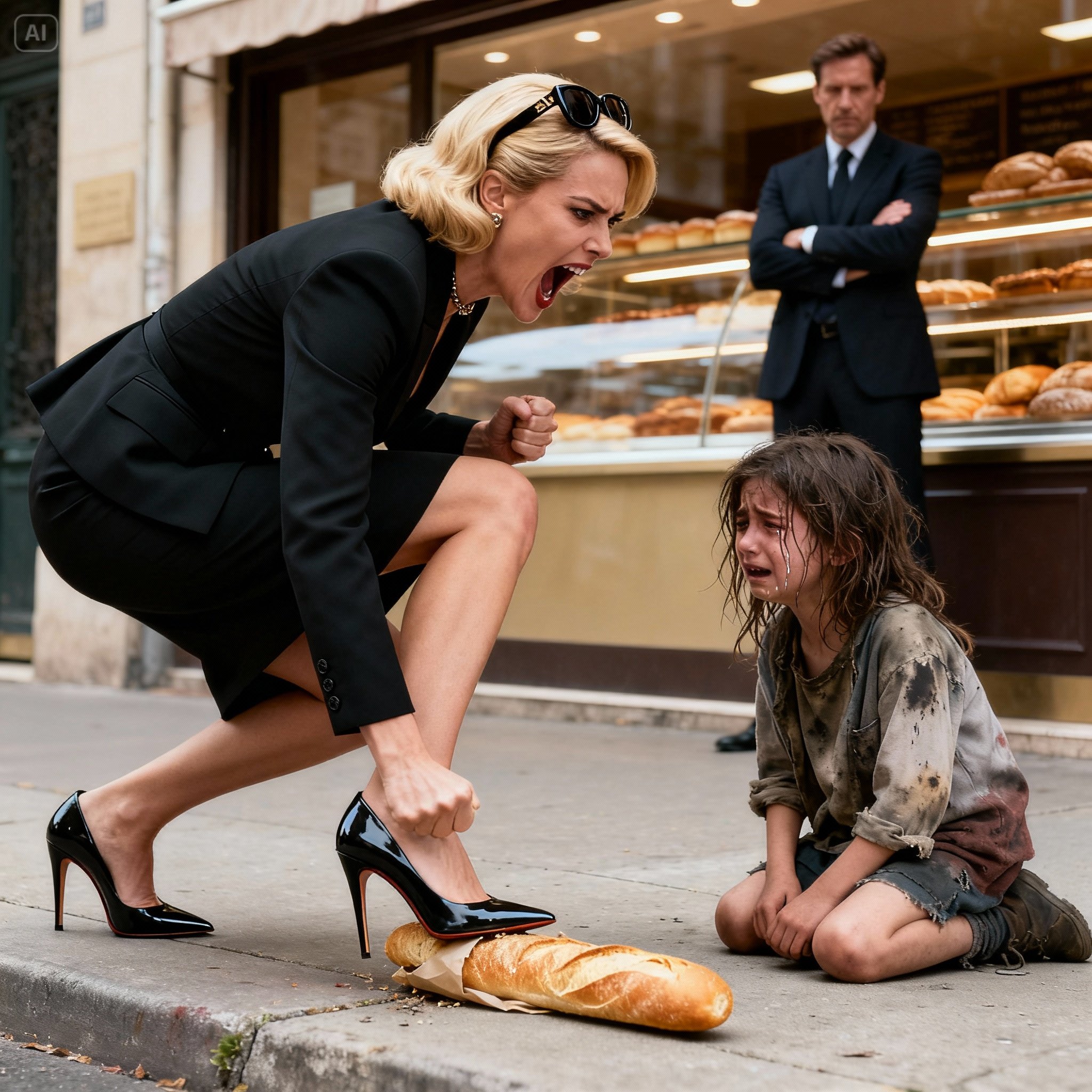
It happened on a gray Tuesday morning, the kind where the city feels half-asleep and people move like ghosts between work, coffee, and routine. The downtown café was full, but quiet — the soft clatter of cups, newspapers rustling, keyboards clicking. No one expected a scene that would change the atmosphere entirely… and change one woman’s life forever.
She arrived like she owned the whole street — an elegant woman wrapped in luxury brands from head to toe, sunglasses that hid her eyes, and a perfume that filled the air wherever she passed. Everyone knew her type: loud, entitled, dripping with money that she used like a shield and a weapon at the same time.
She ordered the most expensive breakfast on the menu, took photos of it, posted them online, and then ate only half of it — leaving the rest untouched, bored, scrolling her phone.
That’s when she appeared.
A tiny girl, no older than eight.
Her hair messy, her clothes worn, but her eyes… big, soft, and pleading.
She didn’t dare step too close — she just stood near the woman’s table, hands trembling, staring at the half-eaten sandwich with a hunger so raw it almost hurt to look at.
“Excuse me…” the little girl whispered, voice shaky.
“Could you… could you give me what’s left? I’m really hungry.”
It should’ve been simple. A yes. A no. A quiet gesture. Something human.
But the woman reacted like she had been insulted.
She stood up abruptly, knocking her chair back with a loud scrape. Everyone froze.
Without a single word, she grabbed her tall glass of iced water — and threw it at the child.
Cold water splashed across the girl’s face, soaking her hair, her clothes, everything.
She gasped, flinched, backed away with wide eyes.
And then came the shouting.
“GET AWAY FROM MY TABLE!
You filthy little thing — you ruin my appetite!
People like you shouldn’t be here!”
Her voice sliced through the café like a knife.
The little girl didn’t fight back.
She just stood there, dripping, shivering, her lower lip trembling as tears started falling.
No one spoke.
No one moved.
People wanted to help, but shame held them frozen — the kind of shame that comes when witnessing cruelty and feeling powerless.
Then —
SCRAAAPE.
The sound of a chair sliding across the floor.
A man stood up.
The man in the corner.
The one who had been quietly drinking coffee and reading a newspaper for the last twenty minutes. Gray suit, black shoes, clean haircut — nothing remarkable at first glance, except for the calmness he carried like armor.
He walked toward the woman slowly.
Not threatening. Not angry.
Just… steady.
The woman rolled her eyes.
“What do YOU want?” she snapped. “This isn’t your business.”
But the man didn’t respond.
Instead, he reached into the inside pocket of his jacket, took out a small, worn photograph, and placed it gently on the table in front of her.
“Look carefully,” he said quietly.
She glanced down — and instantly went white as chalk.
Her lips parted.
Her hands began to shake.
She staggered back a step.
Because she recognized the photo.
It was of her — years ago, looking very different.
Tired. Broke. Holding a cardboard sign on a street corner.
Her clothes dirty. Her hair unwashed.
Her eyes identical to the girl’s — hungry, desperate, hopeless.
“You…” she stuttered. “Where did you get this? Who are—?”
“I’m the man who bought you dinner that night,” he said calmly.
“The man you followed into a shelter when you had nowhere to sleep.”
“The man who paid for your first job training.”
“The man who helped you start over.”
The café went completely silent.
Her jaw moved, but no words came out.
“You were that child once,” he continued softly.
“And all I ever asked was that you help someone like you, someday, when you had the chance.”
He turned to the little girl and knelt down, his voice gentle now:
“Sweetheart, are you hungry?”
She nodded.
“Come with me,” he smiled. “You’ll eat something warm today.”
He stood up again and looked directly at the woman:
“You failed your promise. But you get one last chance.”
She covered her mouth with trembling hands — ashamed, speechless, shaking.
And he added, quietly but firmly:
“If you ever humiliate someone like that again… the world will know exactly who you used to be.”
The woman broke into silent sobs.
The man walked the little girl inside, wrapped her in his coat, and ordered the biggest breakfast the café offered.
The staff and customers, who had been frozen in place, slowly started clapping.
Soft at first.
Then stronger.
An applause for the man, for kindness, for justice — and maybe even a second chance.
The woman stood alone outside, unable to look anyone in the eye.
The girl?
She ate with a smile.
The first warm meal she’d had in days.
And the man?
He watched her with a quiet pride — knowing that compassion, even when forgotten, can always be taught again.
Because life has a way of circling back.
And karma… sometimes sits just one table away.