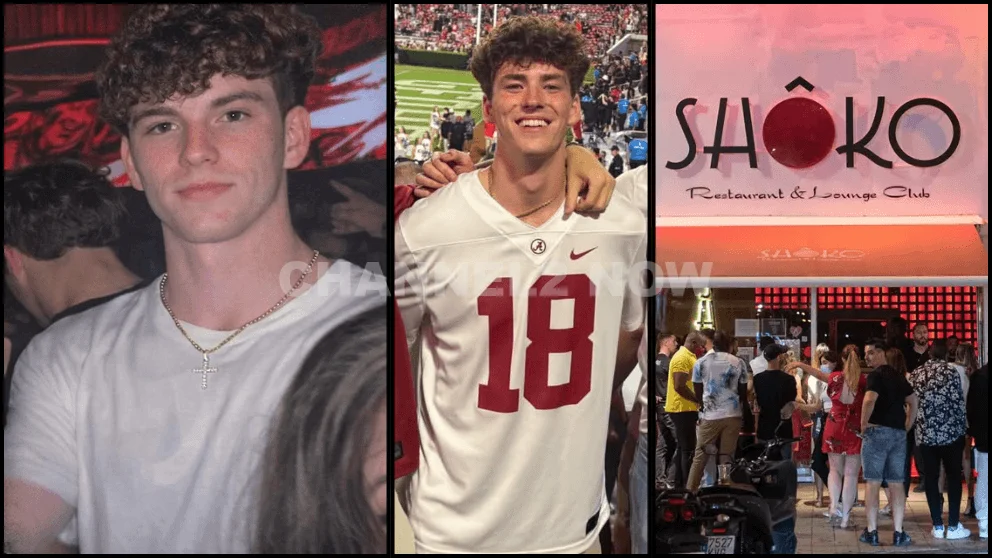
BARCELONA, SPAIN — Friends of James “Jimmy” Gracey, the American student found dead after a night out in Barcelona, are challenging the official conclusion that his death was accidental, citing final text messages sent from inside a nightclub that suggest he feared he was being followed.
Those messages, disclosed this week by members of Gracey’s inner circle, are now intensifying scrutiny of a case that authorities had moved quickly to frame as an accident. For his friends and family, however, the emerging details point to a final stretch of hours that appears far more troubling than first described.
According to fraternity brothers who say they were among the last people to hear from him, Gracey’s tone shifted noticeably in the messages he sent from inside the club. What began as ordinary updates from a night out, they said, became increasingly uneasy, with remarks that suggested he no longer felt safe in his surroundings.
“He knew something was wrong,” one friend said. “That’s why we cannot accept the idea that this was just some random accident.”
The texts, which have not been released publicly in full, are said to indicate that Gracey believed someone was watching or following him inside the venue. Friends now argue that those messages should have prompted a more sustained investigative effort before the case was informally reduced, in public perception at least, to a misadventure ending in tragedy.
That dispute goes to the heart of the growing controversy surrounding the investigation. Gracey was last seen alive after a night in Barcelona’s club district, where witnesses placed him inside a crowded venue in the hours before his disappearance. His body was later recovered, and authorities initially treated the death as accidental. But people close to the case say key parts of the timeline have never been fully explained, including who he was with in the final phase of the night, why his behavior appeared to change, and what occurred during gaps in surveillance coverage.
Friends say the newly discussed texts sharpen those questions rather than resolve them. If Gracey believed he was being followed, they ask, who was the person he feared? Was that individual identified, questioned, or seen on camera near him after the messages were sent? And if such warnings existed in real time, why did the case appear to narrow so quickly around an accidental-death theory?
Investigators have not publicly detailed the full evidentiary basis for that conclusion, and it remains unclear whether all digital communications from Gracey’s final hours were incorporated into the earliest assessment. That uncertainty has fueled frustration among those closest to him, who say the official narrative fails to account for his apparent fear, the missing portions of the timeline, and the unanswered questions surrounding his final movements after leaving the club.
Forensic and digital review could prove decisive. In cases of disputed timeline reconstruction, contemporaneous text messages often serve as critical evidence, helping investigators establish a victim’s state of mind, perceived threat level, and last known interactions. Legal analysts note that such messages do not by themselves prove foul play, but they can materially affect whether an accidental-death ruling appears premature.
For Gracey’s inner circle, the issue is no longer only what happened in his final moments, but whether the investigation moved too quickly past warning signs that now seem difficult to ignore. They describe the messages not as vague expressions of anxiety, but as direct indications that he sensed danger before he disappeared.
That is why, they say, the case should not be treated as settled.
As pressure grows for a fuller accounting of Gracey’s final hours, the central question remains unchanged: if James Gracey was sending messages that suggested he was being followed, what — or who — did he see that night, and why was that possibility not pursued more aggressively before the case was labeled an accident?
Để lại một bình luận