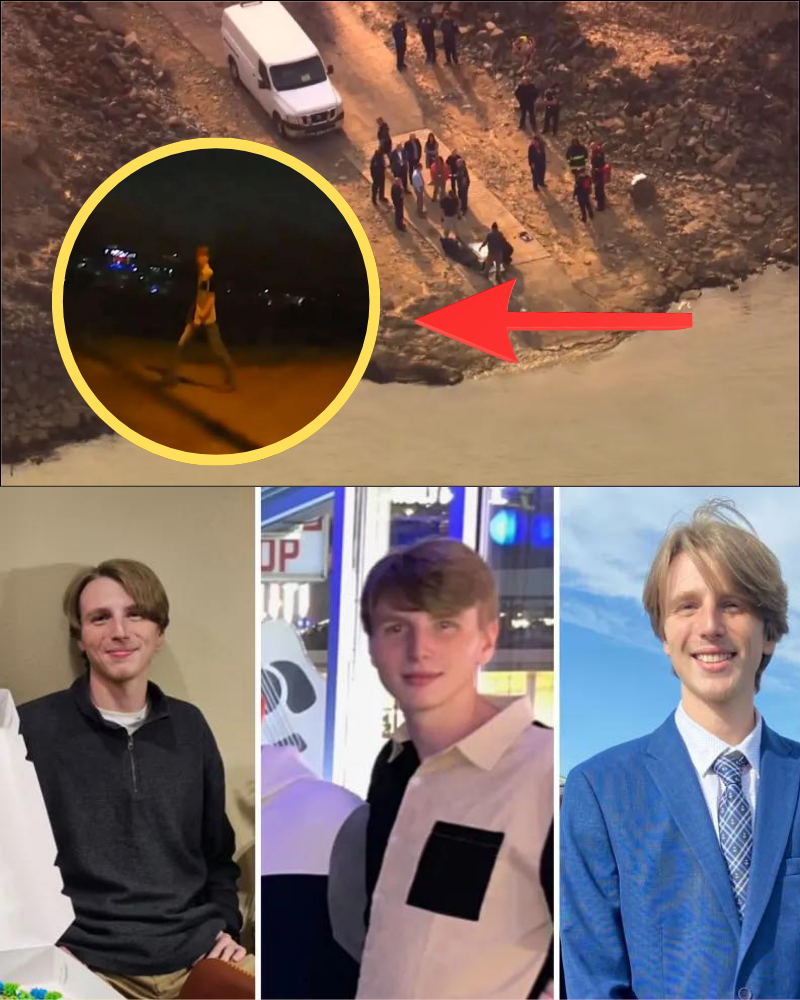
Two years have passed since Riley Strain’s body was found, but the story of this 22-year-old student continues to haunt American public opinion as a timeless warning about the potential risks in seemingly harmless trips. The case not only concluded with a forensic report but also opened up a series of questions about responsibility, party culture, and gaps in personal safety protection.
Riley Strain was a University of Missouri student who went to Nashville with a group of friends from his fraternity for a spring break. It was a common activity in American college life—where groups of friends enjoy the vibrant atmosphere of cities known for their entertainment. However, this seemingly carefree setting became the prelude to a series of events leading to a tragic end.
On the evening of March 8th, Riley and his friends were in the Broadway area of Nashville, considered the city’s nightlife hub. They stopped at Luke’s 32 Bridge—a popular bar that attracts many tourists. According to reports, staff there asked Riley to leave after noticing signs of excessive intoxication. This is a common decision in the service industry to ensure safety, but in this case, it became the starting point for a series of disturbing events.
Security cameras then captured images of Riley Strain walking alone through downtown Nashville. The fragmented footage showed him moving aimlessly, seemingly trying to find his way back to his hotel. However, at some point during the night, Riley completely lost contact with his group. The fact that someone intoxicated was separated from a group in a crowded urban environment immediately raised concerns.

Family and friends quickly reported him missing when they couldn’t contact him. The search involved multiple forces, from local police to federal agencies, along with the support of hundreds of volunteers. During this process, a crucial detail was discovered: Riley’s bank card was found near the Cumberland River. This discovery led investigators to focus on the hypothesis that he may have approached the riverbank area while in an uncontrolled state.
Nearly two weeks later, on March 22, 2024, Riley Strain’s body was found in the Cumberland River, approximately eight miles from his last known location. A subsequent autopsy determined the cause of death to be accidental drowning. Investigators stated that no signs of injury or external impact were found, ruling out the possibility of direct foul play.
The toxicology report provided crucial context: Riley’s blood alcohol level was 0.228—nearly three times the legal driving limit in the U.S. A small amount of THC was also detected. This data reinforced the assessment that he was in a state of severe cognitive and motor coordination impairment. In such a condition, spatial orientation, risk assessment, and reaction to the surrounding environment were all significantly impaired.
Based on the evidence, authorities concluded that Riley Strain may have gotten lost while trying to find his way back to the hotel and accidentally fallen into the river. However, even though the case was closed legally, debates surrounding the circumstances leading to his death have not subsided. Riley’s family has publicly expressed concerns about him being separated from the group in an unstable state, and questioned what else could have been done to prevent this tragedy.
One of the most frequently discussed issues is collective responsibility. In group outings, especially when alcohol is involved, ensuring everyone returns safely is often considered a shared responsibility. Riley’s family believes there was a lack of supervision and support, particularly given everyone’s awareness of his level of intoxication. They have filed a civil lawsuit alleging negligence on the part of the organization involved.

The incident also raises questions about the role of service businesses. While asking a customer to leave for safety reasons is necessary, what happens afterward? Should there be support mechanisms in place, such as arranging transportation or contacting friends who were with the customer? These are issues being debated within the service industry in the US, especially in cities with vibrant nightlife like Nashville.
More broadly, Riley Strain’s death reflects a worrying reality about the culture of alcohol consumption among young people. Gatherings and parties are often seen as part of the college experience, but when uncontrolled, they can lead to serious consequences. Medical experts emphasize that the level of intoxication seen in this case can cause disorientation, impaired reflexes, and an increased risk of accidents.
This incident is not just an isolated case; it brings to mind similar instances where nights of revelry have occurred.
It ended tragically. The similarities to the case of Jimmy Gracey—another student who disappeared after a night out—drawn to a recurring pattern of risk: the combination of unfamiliar environments, drugs, and a lack of mutual supervision.
Two years later, Riley Strain’s story is no longer just a personal tale, but a wake-up call. It reminds us that small decisions—like leaving the group, drinking excessively, or underestimating the risks—can lead to irreversible consequences. At the same time, it calls for building a safer culture where individuals and groups are conscious of protecting one another.
Ultimately, despite the official conclusion, the question of “what if” remains. What if someone had accompanied him on his final journey? What if there had been a way to support him when he left the bar? What if the warning signs had been recognized sooner? But in reality, those questions couldn’t change the outcome; they could only help prevent similar tragedies in the future. And that’s perhaps the most important message this story leaves behind.
Để lại một bình luận