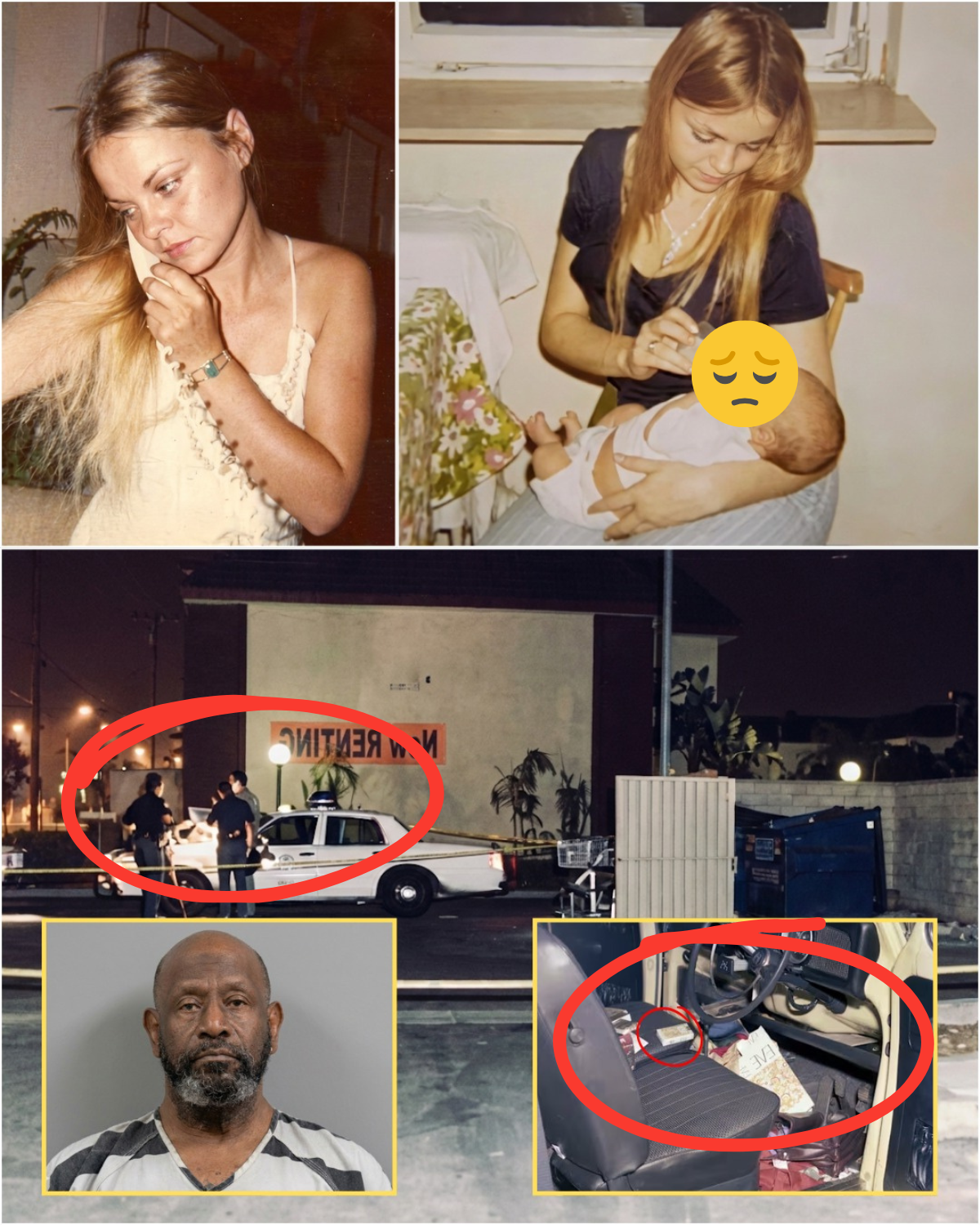
Tonight is nothing special. Just a Monday night out with friends. Her six-year-old son, Allen, is safe at home with family. Tomorrow she’ll go back to her life in San Mateo, back to being a mother, back to the ordinary rhythm of daily existence.
But first: one more drink. One more song. One more laugh with the girls before the night ends.
That’s when she notices the man at the bar.
Her friends have never seen him before. He’s young—early twenties, they’d guess. He’s watching Jeanette. She leans across the table, her voice barely audible over Fleetwood Mac bleeding from the jukebox.
“Ten minutes,” she says, nodding toward the stranger.
Her friends don’t worry. Jeanette seems relaxed. In control. She’s not scared. She’s not being dragged out. She walks toward the door with this man on her own, her red shirt disappearing into the California night.
Ten minutes. What could happen in ten minutes?
The Woman With The Warm Smile
Here’s what you need to know about Jeanette Ralston: she was the kind of woman people remembered.
Not because she was famous. Not because she did anything extraordinary. But because when she smiled at you, it felt genuine. Because when she laughed, you wanted to laugh with her. Because she had a six-year-old son who thought she hung the moon.
She lived in San Mateo, about thirty miles north of San Jose. She worked. She raised her son. She had friends who loved her enough to go out on a Monday night in January just to hear her laugh.
In 1977, San Jose was not yet Silicon Valley. It was still a city of fruit orchards and suburban sprawl, working-class neighborhoods and dive bars. The Lion’s Den was the kind of place where locals gathered—nothing fancy, nothing dangerous. Just a neighborhood spot where you could drink cheap beer and dance to whatever was on the radio.
Jeanette had been there before. This wasn’t her first time. She knew the vibe. She knew the crowd. She knew how to handle herself.
That’s why her friends didn’t panic when she left with the stranger.
She said ten minutes. Jeanette always kept her word.
The Clock Strikes Midnight
Midnight comes. Jeanette hasn’t returned.
Her friends check the bathroom. They scan the crowd. They step outside to see if she’s smoking a cigarette in the parking lot. Nothing. The Volkswagen Beetle she drove—her little blue Bug—is still parked where she left it.
Twelve-fifteen. Twelve-thirty. Twelve forty-five.
Now they’re worried. One of them walks around the block. Calls her name. Checks the nearby businesses. Everything is closed. The streets are empty. San Jose at midnight on a Monday is quiet—too quiet.
One AM. They debate calling the police. But what would they say? “Our friend left with a guy and didn’t come back”? In 1977, that’s not a crime. That’s not even unusual. Women leave bars with men all the time. Maybe she changed her mind. Maybe she went to his place. Maybe she’ll call in the morning.
Two AM. The Lion’s Den closes. The bartender shuts off the lights. The last patrons stumble out into the cold January air. Jeanette’s friends stand in the parking lot next to her Volkswagen, staring at it like it might give them answers.
It doesn’t.
They wait another hour. Then another. At some point—maybe 3 AM, maybe 4—they go home. What else can they do? They tell themselves she’ll call. She’ll explain. There’s a reasonable explanation.
There always is.
Except this time, there isn’t.
The Discovery
Grace Delaney owns an apartment building on Graham Avenue, just three blocks from the Lion’s Den.
It’s February 1, 1977—the morning after Jeanette disappeared. Grace is making her rounds, checking on the property, when she notices something odd. There’s a Volkswagen Beetle parked in one of the carports. Blue. Old model. She doesn’t recognize it. None of her tenants drive a Bug.
She walks closer. Peers through the window.
What she sees will haunt her for the rest of her life.
Jeanette Ralston is crammed into the back seat. Her body is wedged between the front and back seats at an unnatural angle. Her red long-sleeve shirt—the one she was wearing last night—is twisted around her neck, tied so tight it’s embedded in her skin.
Grace is screaming. Running. Calling police. Within minutes, San Jose Police Department units are flooding Graham Avenue, sirens wailing in the early morning light.
The Crime Scene
Detective teams swarm the Volkswagen.
What they find is methodical horror. Jeanette is partially clothed. Her face shows signs of severe beating—swelling around her eyes, bruising on her cheeks, split lip. The autopsy will later confirm she was sexually assaulted before being strangled.
But here’s what chills the investigators: the killer tried to burn the evidence.
There are scorch marks inside the car. The upholstery is singed. Someone attempted to set the Volkswagen on fire with Jeanette’s body inside. But the little Bug refused to burn. Maybe the fire didn’t catch properly. Maybe someone interrupted. Maybe luck—or fate—intervened.
The car sits there, three blocks from where Jeanette was last seen alive. Three blocks. A five-minute drive. A ten-minute walk.
She never had a chance to scream. Never had a chance to run. Whatever happened in those “ten minutes” happened fast and brutal and final.
The Evidence
The 1977 investigators do everything right.
They photograph the scene from every angle. They dust for fingerprints. They collect hair samples, fiber evidence, biological material. They carefully bag the red shirt used to strangle Jeanette. They scrape under her fingernails—because Jeanette fought. The skin under her nails tells them she clawed at her attacker, trying desperately to pull that shirt away from her throat.
And then they find something odd.
Sitting on the passenger seat is a pack of Eve cigarettes.
Eve was a brand marketed specifically to women in the 1970s. The pack featured floral designs—”flowers on the outside, flavor on the inside,” the ads promised. The cigarettes were long and slender, 120mm instead of the standard 85mm. “Every inch a lady,” one slogan bragged. They were positioned as elegant, feminine, sophisticated.
The problem? Jeanette didn’t smoke Eve cigarettes.
Her friends confirm it. Her family confirms it. This pack doesn’t belong to her. Which means it belongs to someone else. Someone who was in her car. Someone who left it behind.
The investigators lift fingerprints from the pack. Perfect prints. Clear ridge patterns. Level-two detail that’s admissible in court. They photograph them, catalog them, send them to the FBI’s fingerprint database.
And then they wait.
The Witnesses
Jeanette’s friends are brought in for questioning.
They describe the man she left with. White male, early twenties, average height, average build. Dark hair. No distinguishing features they can remember—it was dark in the bar, the lighting was terrible, they only saw him for a few minutes.
A composite sketch is created. It’s circulated to local police departments, published in newspapers. Tips come in—dozens of them. Each one is followed up. Each one leads nowhere.
Here’s what the witnesses remember most: Jeanette wasn’t scared.
She wasn’t stumbling drunk. She wasn’t being coerced. She walked out with this man like they’d agreed to something—maybe to sit in her car and talk, maybe to drive somewhere nearby. “Ten minutes,” she’d said. She meant it.
Whatever he told her to get her to leave, it worked. Whatever he promised, she believed.
And it killed her.
The Dead End
The fingerprints from the Eve cigarette pack are run through the FBI’s database.
No match.
The investigators run them again. Still nothing. They expand the search to California state records, Department of Defense military personnel, every database available in 1977.
Nothing. Nothing. Nothing.
Whoever left those fingerprints has never been arrested. Never been printed for a job requiring security clearance. Never served in the military—or if he did, his prints aren’t in the system yet.
The DNA under Jeanette’s fingernails? In 1977, that evidence is useless. DNA profiling won’t be invented for another seven years. The concept of using genetic material to identify criminals is pure science fiction. So the biological evidence is carefully preserved, labeled, and stored in an evidence room, waiting for technology that doesn’t exist yet.
The case goes cold.
Not because the investigators gave up. Not because they didn’t care. But because they’ve hit the limits of 1970s forensic science. They have perfect evidence—fingerprints, DNA, witness descriptions. But no way to connect it to a suspect.
The file is marked “unsolved.” Jeanette’s murder becomes another statistic. Another cold case in a filing cabinet. Another family left without answers.
The Boy Who Waited
Allen Ralston is six years old when his mother stops coming home.
He has one memory that never fades: sitting at the kitchen table in San Mateo, waiting. His father’s face. The relatives arriving. The hushed adult conversations. The way everyone kept looking at him with eyes full of tears and pity.
And then the slow, horrible realization that his mother wasn’t coming back. Not today. Not tomorrow. Not ever.
He’s too young to understand death. Too young to comprehend murder. Too young to process that someone took his mother away and no one could stop it.
But he’s old enough to feel the absence.
First grade without her. Learning to read without her. Losing his first tooth and having no one to put it under his pillow for. Birthdays where he blows out candles and makes the same wish every year: Please bring my mom back.
She never comes back.
The Photographs
Allen grows up in the shadow of absence.
He has a few photographs of his mother—maybe five or six scattered among family albums. Jeanette laughing at something. Jeanette holding baby Allen. Jeanette in her twenties, full of life and possibility.
But photographs are not memories. Photographs don’t tell you what someone’s voice sounded like. Don’t tell you what they smelled like when they hugged you. Don’t tell you the little things—how they hummed while cooking, how they squeezed your hand three times to say “I love you,” how they tucked you in at night.
Allen has artifacts, not memories.
He goes through childhood trying to piece together who his mother was from stories other people tell. “She had the most beautiful smile.” “She loved to laugh.” “She would have been so proud of you.” Well-meaning words that only deepen the wound.
Every Mother’s Day is torture. Every school event where other kids’ moms show up. Every milestone—middle school graduation, driver’s license, high school prom, college acceptance—marked by the woman who should be there but isn’t.
Allen becomes a man. He gets married. Has children of his own. And every time he holds his kids, he thinks about the mother he barely remembers. The grandmother his children will never know.
Forty-eight years pass like this.
The Manila Envelope
May 2024.
Allen Ralston is fifty-three years old now. Nearly five decades since his mother died. He’s lived longer without her than most people live total.
His father calls him over. Hands him a manila envelope. Inside are photographs Allen has never seen before—pictures discovered in a storage box, forgotten for decades.
He opens the envelope.
There’s his mother on the phone, laughing at something the person on the other end said. There’s his mother in the kitchen, mid-conversation, captured in an unguarded moment. There’s his mother alive—not posed for a formal portrait, but living. Caught in the ordinary moments that make up a life.
Allen holds these pictures and breaks down crying.
He’s fifty-three years old, weeping like that six-year-old boy at the kitchen table. Because these aren’t just photographs. They’re proof. Proof that she was real. Proof that she existed beyond the trauma. Proof that she was a person—not just a victim, not just a cold case, but a woman who laughed on the phone and cooked dinner and lived.
What Allen doesn’t know—what he can’t know—is that at this exact moment, 2,400 miles away in Ohio, investigators are about to knock on a door.
And the man who answers will finally have to face what he did forty-eight years ago.
Để lại một bình luận